Robin Bergart, University of Guelph
Amanda Etches, University of Guelph
Jordan Pedersen, University of Guelph
“[A]esthetics are important to librarians. We seek to satisfy our aesthetic sense through harmony in architecture of library buildings, beauty in literature, music, and the arts, and even elegance in library systems.”1Gorman, M. (2000). Our enduring values : librarianship in the 21st century. American Library Association.
Over the course of our careers as academic librarians, we’ve been pleasantly surprised to discover colleagues with “secret” artistic talents. Sometimes we would only learn about their lives as accomplished painters, writers, dancers, and musicians when we got to know them better, or when we happened across their names on the cover of a book or attached to an exhibit or performance. We wondered why their artistic side wasn’t more widely known across the library and why they so often seemed to keep their artistic work hidden away, intentionally or otherwise. We were curious to learn more about the artistic lives of academic librarians. Can you lead a full artistic life while pursuing a career as an academic librarian? How do you balance a library career with an art practice?
This is an exploratory study whose aim is to define and describe the phenomenon of the “artistic academic librarian,” that is, academic librarians who are seriously committed to making art. We want to discover to what extent an academic librarian career is compatible with a serious art practice. The study is based on a survey and interviews with artistic academic librarians across Canada who generously shared their experiences with us.
Meet the Researchers
 This is Amanda. She has been an academic librarian for over twenty years and is currently the University Librarian at the University of Guelph. She draws, paints, prints, and crafts. Amanda has been interested in the connection between artistic practice and librarianship for years. In 2014 she interviewed artist-librarians for a series on her blog called, Sunday Artist, Monday Librarian. For the current research project, she was especially drawn to questions like: Does academic librarianship lend itself to supporting a creative practice? What is the interplay between academic librarianship and artistic practice? How do they influence each other? Does academic librarianship provide opportunities for creativity in a way that other types of work (or working in other types of libraries) do not?
 Meet Jordan. Jordan has an undergraduate degree in Studio Art and Philosophy and has worked as an academic librarian since 2019. She is currently the acting head of the Research & Scholarship team at the University of Guelph. She is an interdisciplinary artist who usually works on a small scale using textiles, paper, drawing, printmaking and sculptural elements. A common thread in much of her work is memory, relationships, and sharing grief and joy. Jordan was interested in this project primarily from a labour perspective. Does the stability and comparatively high wages of academic librarianship attract artists? How important is it to artistic academic librarians that there are provisions in collective agreements to engage in artistic scholarship? Do artist-librarians see themselves as artists first or as librarians first?
 Robin is an assessment and user experience librarian. She isn’t an artist—though she desperately wishes she were—but she dabbles in different artistic mediums in fits and starts. Robin wanted to know more about what role art plays in the lives of artistic academic librarians. Does it help fill a void that the career can’t satisfy? Why are the artistic identities of some academic librarians kept private? Is it ever risky to divulge your artistic identity at work?
Defining Our Terms
What do we mean when we say this is study of “artistic academic librarians”? The academic librarian part is straightforward, defined in our survey as “currently employed as a librarian at a Canadian university.” Archivists working in academic libraries who responded to our study were also included. We limited this study to librarians and archivists working in universities because of a possible connection between academic status—which confers a degree of autonomy and flexibility—and the capacity to sustain an art practice. Additionally, some academic librarians in Canadian universities are employed under collective agreements which include a provision for creative or artistic expression. This means our study subjects may have time and opportunity to pursue artistic activities in ways which may not be true for librarians working in other library sectors.
“Artistic” is more difficult to define. We don’t imply any judgement on the quality or success of the librarians’ artistic output; rather we wanted to identify people who are strongly committed to making art and for whom art is an important part of their life, not just an occasional hobby. We took guidance from sociologist Robert A. Stebbins’ work on “serious leisure” to distinguish those who pursue art casually from those who take it more seriously. Serious leisure describes activities which demand effort, commitment, perseverance, and the acquisition of special skills, knowledge, and experience. They are pursued for a sense of accomplishment, for self-expression, and for self-actualization, less so for relaxation or entertainment. (Stebbins, 1982). Heo, et. al (2020) operationalized Stebbins’ theory and described a leisure pursuit as “serious” if (1) the activity is very important to a person’s identity, (2) the person strives to become accomplished in the activity, (3) the person regularly trains for the activity, and (4) the person believes they have the potential to become good at the activity (p.213).
Although we aimed to recruit “serious leisure” artists to our study, we did not want to exclude anyone who might take exception to the term “serious” or who does not explicitly call themselves an artist. We compromised by describing “artistic” as anyone who “engages in artistic activity on a regular basis in any medium, including literary (e.g., poetry, fiction, playwriting, etc.), performative (e.g., dance, music, theatre, etc.), visual (e.g., painting, photography, textiles, etc.), or audiovisual (e.g., film, etc.).”
Literature Review
We found only one empirical study of artist-librarians in the library literature. Dorney (2014) interviewed three poet-librarians and speculated that “the roles of artist/creator and librarian [are] frequently embodied by the same person” because “being surrounded by an array of ideas and other peoples’ creations makes one want to create in turn.” Without direct precedents for our study, we read literature adjacent to our topic. These sources helped generate questions to include in our study but did not provide any direct support for describing the phenomenon of artistic academic librarians. We reviewed:
- First-person reflections by librarians who are artists (e.g., Baur, 2018; Etches, 2014; Russell-Bogle, 2001; van Arnhem, 2017).
- Research on the information habits of artists and crafters (e.g., Cowan, 2004; Frank, 1999; Gorichanaz, 2020; Greer, 2016; Hunt, & Jennings, 2021, Patelos, 2013; Prigoda & McKenzie, 2007).
- Research about the experiences of academic librarians (e.g., Kendrick, 2017; Lackner, 2024; Nelson & Davis, 2025; Revitt, 2020; Swanson, Tanaka, & Gonzalez-Smith, 2018; Wheeler & McKinney, 2015),
- Studies of academic libraries and creativity (e.g., Adams, Forrest, & Falciani-White, 2024; Appleton, Montero, Jones, 2017; Bergart & D’Elia, 2010; Cunningham & Robison, 2007; Dahlquist, 2023; Falciani-White, 2024; Klotz, 2025; Martinez, 2022; Wheeler, 2023).
- Examples of arts-based research methods in library and information science research (e.g., Bedi & Webb, 2020; Doucette & Hoffmann, 2019; Gomez, 2020; Hartel, 2014).
- Accounts of other professional-artist combinations such as artist-lawyers (e.g., Abrams, 1990; Skuczyński, 2024; Solmssen, 1968) and artist-doctors (e.g., Baruch, 2017; Morris, 1959; Seggie, 2014; Weiner & Silver, 2015).
- Inquiries into who is an artist (Baldin & Beale, 2022; Jeffri & Throsby, 1994; Lena & Lindemann, 2014).
- Studies of arts-based scholarship done by librarians (e.g., Hoffmann, 2025; Kampen & De Forest, 2023; Power & Wheatley (2025); Thomas & Leonard, 2014). Hoffmann (2025) surveyed Canadian academic librarians and archivists about the research they conduct outside the discipline of librarianship and archival studies (LIAS). She included “creative works” as a type of research outside LIAS. Hoffmann found that “32% of respondents (n=111) said they have done non-LIAS research, including creative works, as part of their job” (p. 6) but of these, “[r]elatively few… have performed, published, or displayed creative works” (p.7). Hoffmann asked, “how important is it to you that librarians and archivists be able to publish, perform, or display creative works as part of their research responsibilities?” Most said this was very or extremely important (p.8); however, some of the qualitative responses indicate more ambivalence: “For creative works, respondents questioned the line between professional responsibilities and extracurricular interest” (p.10)
Thomas & Leonard (2014) surveyed American academic librarians about conducting scholarship and engaging in creative activities outside the library and information science discipline. Of the 136 librarians who responded to the survey, just under half said they had engaged in creative activities, such as publishing poetry, exhibiting art, and musical performance. Over half of those who engaged in creative activities said they were entitled to use professional development time and research leave for their creative endeavours, but there was some ambivalence about whether their library explicitly supported non-LIS scholarship. Regardless, they pursued creative activities “for the love of it” (p. 556) and felt their creative interests made them better librarians.
Research Methods
Our primary research comprised a survey and interviews. The study was approved by the University of Guelph Research Ethics Board. We shared the survey through library association listservs, LinkedIn, and personal connections across Canada. The survey was available in French and English and was open for two months in Spring 2025 followed by interviews conducted online in Fall 2025.
The goals of the survey were:
- To estimate how many artistic academic librarians are working in Canadian universities.
- To ascertain whether academic librarianship and artistic practice are compatible pursuits.
- To prepare us for the interview stage of our research.
Interview participants were recruited through the survey via a separate, optional Qualtrics survey unconnected to their survey responses. This second survey invited participants to provide their name and email if they wished to be contacted for a follow-up interview. The French version of the survey indicated that the interviews would be conducted in English only. We recorded the conversations and each of us reviewed the transcripts and recordings individually. Together we identified the most salient and interesting themes using thematic analysis.
We offered participants the option of meeting with the us on their own or in a small group with two other participants. The reasons for offering these two options were both practical and experimental. Individual interviews accommodated participants who wished to preserve their anonymity. Small group interviews let us include more participants without devoting extra hours to interviewing and also let us see if the group interview generated a different kind of discussion. We found the group interviews especially energizing and the participants seemed to enjoy hearing about others’ experiences. In some cases, they directly asked each other questions.
The goal of the interviews was:
- To more thoroughly explore artistic academic librariansʼ perspectives on the compatibility of their library career and art practice.
We developed our interview guide from questions generated in discussions among the three of us about the role art plays in our own lives, responses to the survey that we wished to know more about, and a review of the literature. All interview participants were emailed questions in advance so they could prepare if they wished, but during the interviews we encouraged an informal, conversational flow where we let ourselves explore different angles and interests as they came up. The questions we sent the participants were:
- Tell us about your academic librarian career and about your artistic practice.
- What do your library career and your artistic practice mean to you?
- How do other librarians perceive your artistic practice? How do other artists perceive your work as an academic librarian?
- Have you given much thought before about what being an artist-librarian means to you?
- How important is it to you that your employer allows arts-based research?
Demographic Profile of the Survey Respondents and Interview Participants
We received 185 usable responses to the survey (23 in French and 162 in English). Eighty librarians provided their contact information for interviews. We interviewed 19 participants who were the first to sign up for interview timeslots. The interviews were conducted as five one-hour individual interviews and five ninety-minute group interviews.
The survey responses represent about eight percent of all academic librarians working in Canadian universities. The 2025 census by the Canadian Association of Professional Academic Librarians (Fallis et al., 2026) estimates that there are 2,324 academic librarians working in Canadian university libraries. We received 185 survey responses, representing approximately 8% of this population. Our survey was directed specifically at academic librarians who are also artists. Because the size of this subgroup is unknown but necessarily smaller than the total population of academic librarians, the proportion of artistic academic librarians represented in our responses must be greater than 8%, although the exact percentage cannot be determined.
Our survey respondents closely mirror demographic data from the CAPAL census. Most survey respondents have worked in an academic library for more than 11 years (57%), followed by 6-10 years (22%) and 0-5 years (22%). This matches fairly well the CAPAL census of 63%, 20%, and 17% respectively (p.43). Ninety-seven percent of our survey respondents are employed full-time, identical to the CAPAL survey results (p. 37). Most survey respondents have achieved permanent status with continuing appointment or tenure (74%), comparable with 85% in the CAPAL census who have tenure status, permanent appointment, or continuing appointment (p.38). Twenty-seven percent of survey respondents work in library management compared with 20% in the CAPAL census (p.35).
Just over half (57%) of respondents to the English language survey replied that research or scholarship is requirement of their position. Only one respondent to the French language survey said they are required to conduct research or scholarship. This reflects the fact that at many French language universities in Quebec, librarians are not part of faculty associations, and don’t share in scholarship responsibilities. The CAPAL census shows 58%243.08% of CAPAL respondents said, “Scholarly activity is an expectation of my work” and 14.85% said “Scholarly activity is an expectation of my work but with limitations (=57.93%). of librarians nationally have scholarly activity as an expectation of their work (p. 40).
About a third of survey respondents (28%) are connected to the arts through their library work, such as working in a specialized music or art library, or at a school of art and design, working as a liaison librarian for an arts program, or having responsibilities as an exhibit curator, digital image archivist, or makerspace instructor.
Respondents’ art practices:
- Visual (e.g., painting, photography, textiles): 50% (n=93)
- Performance (e.g., dance, music, theatre): 36% (n=67)
- Literary (e.g., poetry, fiction, playwriting): 29% (n=34)
- Audiovisual (e.g., film): 3% (n=6).
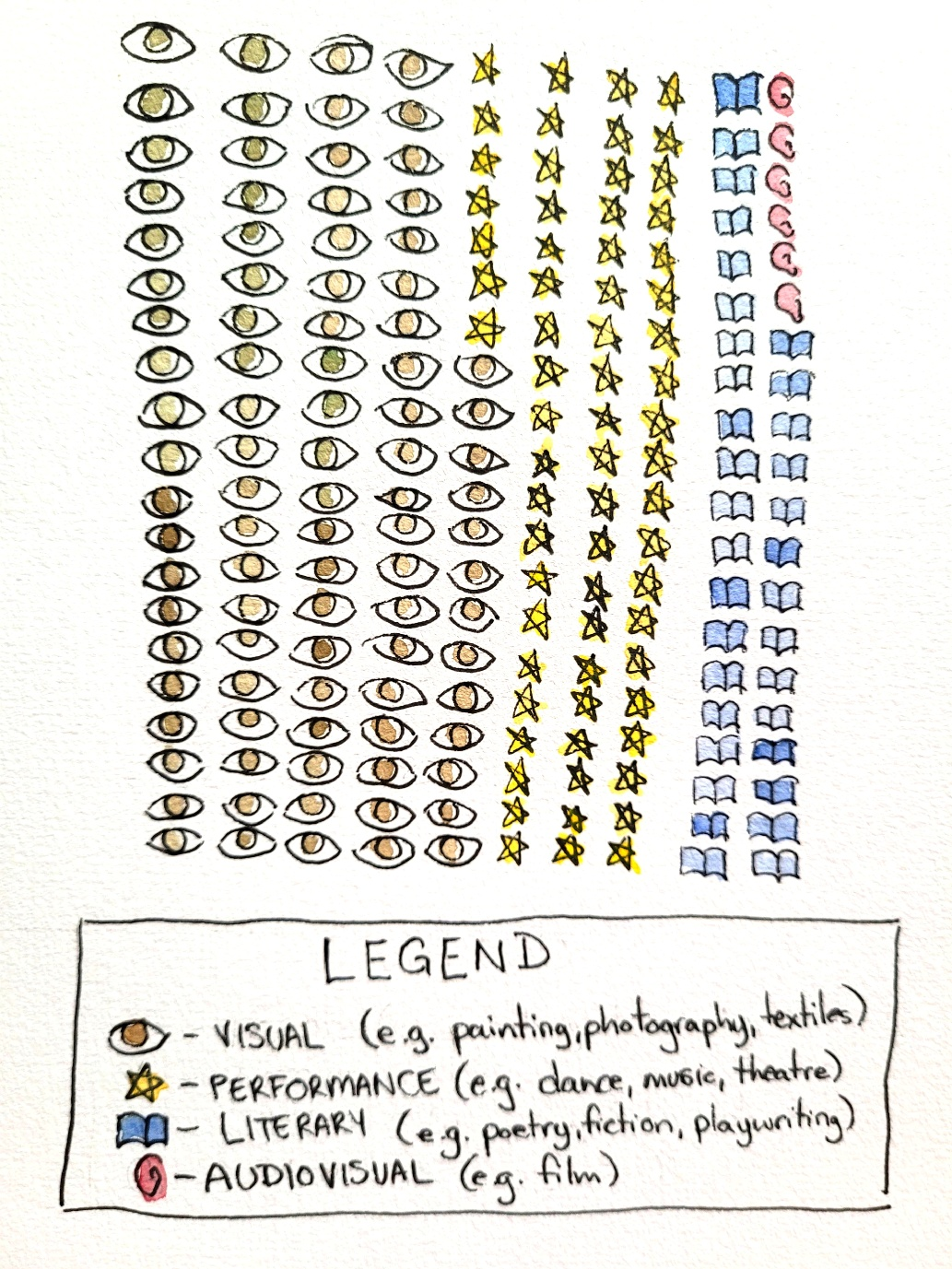 Figure 1. Survey participants’ art practices.
A substantial number have had formal art training:
- Ad hoc courses or workshops: 57% (n=105)
- No formal training: 31% (n=58)
- Undergraduate courses in fine arts: 28% (n=52)
- Mentorship or apprenticeship: 9% (n=17)
- Graduate degree in fine arts: 8% (n=15)
- Other: 18%. (n=29).
“Other” responses included high school classes, private lessons, writing groups, Royal Conservatory of Music, online resources, and current enrollment in an MFA.
Many respondents spend a considerable amount of time on their art, which suggests a “serious leisure” level of commitment to artistic practice:
- 21 hours+ per month:19% (n=35)
- 11 – 20 hours per month: 36% (n=67)
- 1-10 hours per month: 44% (n=82).
Survey respondents have been making art for:
- 11+years: 77% (n=142)
- 6-10 years: 10% (n=19)
- 0-5 years: 13% (n=24).
Survey respondents have been working in an academic library for:
- 11+years: 59% (n=109)
- 6-10 years: 22% (n=41)
- 0-5 years: 23% (n=42).
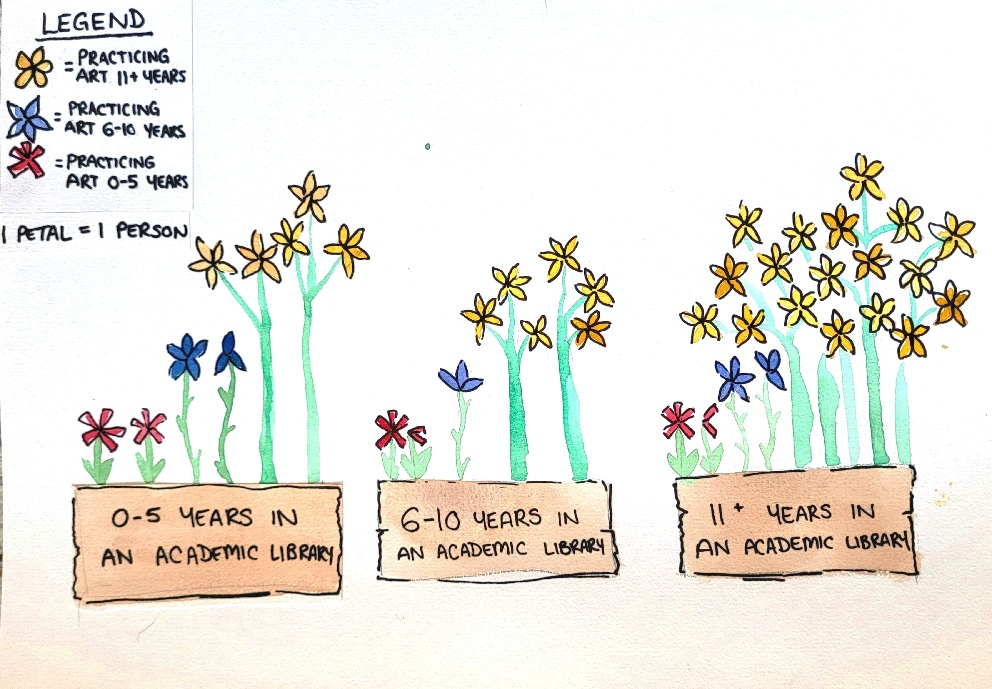 Figure 2. Survey participants by years working in academic libraries and years of making art.
We asked respondents to select from a list of twenty possible reasons why they practice their art. These indicators of serious leisure (Stebbins, 1982, p. 257) were selected by many respondents:
- Personal fulfillment: 93% (n=172)
- A sense of accomplishment: 63% (n=116)
- Self-expression: 62% (n=114)
- To learn and develop skills: 59% (n=109)
- Because it’s who I am: 51% (n=94)
- For self-enrichment: 42% (n=78)
- For self-actualization: 39% (n=72).
In addition to serious leisure reasons, respondents cited these “casual leisure” motivations for practicing art:
- To have fun: 66% (n=123)
- To relax: 57% (n=105)
- It’s a hobby: 55% (n=102)
- Self-care: 52% (n=97).
Other reasons for practicing art include:
- It’s an aesthetic pursuit: 45% (n=83)
- To do something completely separate from work: 45% (n=83)
- It’s a social activity: 42% (n=78)
- To make things for people: 41% (n=76)
- To communicate something: 35% (n=64)
- To make a difference to others or the world: 23% (n=43)
- It’s time to be alone: 23% (n=42).
- To fill my time: 13% (n=24)
- To sell my art for income: 10% (n=18)
Respondents also filled in these responses:
- To use a different part of my brain
- To do something tactile
- To escape or change reality
- To make money for a charitable cause
- To connect with family, culture, or community
- To perform for an audience
- To develop into a self-employed artist
- To engage in research.
One respondent wrote, “I know I selected basically everything (except money, haha) but it’s all true. Making art is who I am, and it’s what makes my life feel like it’s mine. It really is all of these things to me.”
Our interview participants are from five different provinces, with over half located in Ontario, where there is the highest concentration of universities.3The 2025 CAPAL census received 36% of survey responses from Ontario. Other Canadian provinces and territories provided 0.2% – 20% responses each. Only one respondent from our French language survey participated in an interview. The participants work in a wide range of academic library positions such as technical services, management, and scholarly communications. Only three have library work directly related to the arts. One participant works as a subject liaison for fine arts and two work in specialized arts libraries. Our participants’ artistic interests include music, writing, performing arts, ceramics, textiles, drawing, and painting. Six have an undergraduate or graduate degree in visual arts, writing, music, or theatre, and some of them started out with a plan to become full-time artists. All the interview participants spend several hours per week on their art and had previously reflected on why they make art and the role it plays in their life.
Perspectives of artistic academic librarians at Canadian universities
The survey and interviews gave us data to answer five questions related to the compatibility of academic librarianship and artistic practice:
- Does academic librarianship support an artistic life?
- Would you give up the academic library career if you could?
- Can it be risky to divulge your artistic identity at work?
- Do artistic librarians use their artistic skills at work?
- Does it matter to artistic academic librarians if their collective agreement provides for artistic expression?
1. Does academic librarianship support an artistic life?
We explored compatibility between academic librarianship and art practice in the survey and in the interviews. The survey responses suggest that academic librarianship can be a good career choice for someone devoted to an artistic practice. Most of the responses in the table below point to a positive (or at worst a neutral) relationship between librarianship and making art.
| Survey Question | Agree or Strongly agree | Neutral or No opinion | Disagree or Strongly disagree |
|---|---|---|---|
| Being a librarian contributes positively to my artistic practice | 48% (n=88) | 39% (n=73) | 13% (n=24) |
| I use my librarian skills or abilities in my art | 55% (n=101) | 25% (n=46) | 21% (n=38) |
| I use my artistic skills or abilities in my library work | 64% (n=119) | 16% (n=29) | 20% (n=37) |
| Being an artist contributes positively to my work as a librarian | 77% (n=143) | 18% (n=34) | 4% (n=8) |
| I get support and/or a sense of community from other artist librarians | 36% (n=66) | 29% (n=53) | 36% (n=66) |
| I have been able to realize my artistic aspirations at least in part because of my career as a librarian | 38% (n=71) | 26 % (n=48) | 36% (n=66) |
| I can be as artistic as I want to be at work | 22% (n=41) | 31% (n=58) | 46% (n=86) |
| I can be as playful as I want to be at work | 24% (n=45) | 24% (n=45) | 51% (n=95) |
| I can be as creative as I want to be at work | 35% (n=64) | 29% (n=53) | 37% (n=68) |
We received 141 responses to the open-text question “How is your career as an academic librarian compatible or incompatible with your art practice?” We coded 74 of these 141 responses (52%) as indicating that an academic library career and an art practice are not only compatible but mutually beneficial. Respondents wrote how “les deux domaines peuvent se nourrir” (the two can feed into each other) and that they “align at the conceptual level.”
Several reasons for good compatibility between librarianship and artistic practice were given in the interviews:4The quotations were edited and condensed for readability. As some interviewees preferred to remain anonymous, we are not attributing any of the quotations. Each participant is assigned a letter of the alphabet as a pseudonym.
1. An academic library career provides financial stability and the means to cover the costs of art materials and training:
Having heard about various professional musicians in Canada and what they have to do to make ends meet, I feel like I’ve ended up in a pretty good place….The job enables me to pursue music to the extent that I do and to live comfortably. And for me that comfort and that security ultimately is more important to me than my artistic pursuits, but I mean they’re a close second. (Participant “F”)
Having a librarian job is important for my crafting because it allows me to afford my hobby. I recognize that fibre arts in particular can be an incredibly expensive hobby, it can be really prohibitive, like it’s not the most accessible craft in the world. (Participant “G”)
2. The career provides enough autonomy and flexibility (including work from home, sabbaticals and professional development time) to take time for art and to participate in performances:
There’s always been a lot of flexibility with your time, at least where I am, so it just makes it easier when I do music stuff on campus, if there’s a rehearsal during the day, I can just work longer one day or on the weekend. I can just make up the time. (Participant “R”)
I joined the potters’ guild and recently joined their board. I have a month of professional development time over the course of a year, and I work one evening a week. So, I’d always spend a morning in the studio and then I would kind of take time throughout the year in my studio as professional development time and also the board work as professional development time. (Participant “S”)
I did at one point take a class during work time…. I just came to work late that day and worked later in the evening and just offset everything…. But then that’s a huge privilege to be in a place where I can set my own schedule. (Participant “O”)
When I quit the public library [to work in an academic library], I just felt like I had a lot more time and space to get back into [music]. And all of that mental bandwidth came back. It was like night and day…. I quit, started at the university and…I started writing music again, and then it was a few months later I had turned out an album’s worth of material…. So yeah, a dramatic, dramatic, dramatic difference.” (Participant “Q”)
3. The university environment provides opportunities for artistic collaboration, inspiration, and continuous learning:
I have really wonderful connections with staff and faculty who are all practicing artists. So that’s where a lot of collaboration and inspiration comes from. I also watch our grad students and how they build their practice to be a two-year long project where they’re doing a lot of research. And I’ve kind of started to pick up on that practice, like reading a lot more about things that I’m interested in and then having that inform my practice, whereas before [art] almost felt like an escape, like I needed to do it to kind of calm my brain down in the evening. (Participant “S”)
[The library] is a very creative place. And I think universities encourage that kind of creativity. It’s a place where students are discovering what they want to do with their lives, right? And so, if you choose to work in a place like that, I think you’re influenced by that constant drive to create and learn. And so, part of what attracted me to academic librarianship was that I could be, as I tell people, “academia adjacent.” I’m in this environment that I really like and I can help support it. And I feel like that environment also encourages artistic endeavors. (Participant “B”)
I’m still so thrilled about being in the academic world. I’m encouraged to and expected to learn and do research…. I can talk about [art] and hear my colleagues talk about it and what they do. And even if it’s not directly related, it’s still considered a relevant piece of who you are and what you’re bringing to the table. And I think that’s really fantastic being an academic librarian. (Participant “L”).
4. Universities and creative communities tend to go hand in hand. Whether the university is in a big city or in a small university town, working in a university means you can likely find places in the community to pursue your art.
You feel it when you’re in [a big city]. You feel the energy and if you have an artistic side, you will be fulfilled more than in [the smaller city I live in now]. There’s not the same energy when you’re walking in the street or during the weekend. I was in [a big city] this weekend for two concerts, and you don’t have that same energy [here]. [Nevertheless, in this smaller city where] I work there’s young people and there’s cultural diversity. And that’s why I’m still here and I that’s why I love it because when I go on the campus, you feel the energy, that there’s something going on there and it’s a motivation for me. (Participant “N”)
What was interesting about living in [a small town] was it is the first place I’d ever lived where I couldn’t keep parts of my life entirely separate. They were going to bump up against each other and overlap in interesting ways…. It was a small enough place that it felt like it was OK to share. It felt almost encouraged to share more parts of you and particularly your artistic practice there because everyone else was sharing theirs. You just kind of expected to know more sides of people and to see them doing their artistic thing. I really grew to love it. (Participant “H”)
One of the things I find interesting about living in [this big city] is everyone is so passionate about their “hobbies.” They’re 100% into something so there’s no “hobbyists.” You are devoting all of your energy and wanting to be the very best and even if it’s not your profession or it’s not how you’re making money, people are very serious about it. (Participant “O”)
The story isn’t all positive, however. Twenty-six respondents (18%) indicated that their library career and their artistic practice are not incompatible, but they are completely separate or unrelated (e.g., “while the overlap is quite small, I like it that way”; “one does not inform the other, nor do I need or want them to “). We coded 19% of survey respondents (n=27) as feeling ambivalent about the compatibility between academic librarianship and making art. These responses offer examples of both compatibility and incompatibility. Common points of tension include not having enough time or energy at the end of the day for art. Some believe their library does not support creativity. Some describe potential friction between themselves and their colleagues over their art practice (e.g., “Being in a loud band isn’t exactly “library stuff” and very occasionally can lead to misunderstandings or bizarre assertions about ‘professionalism’”; I’ve thought about publishing under a different name but just the thought of someone connecting the dots stresses me out”; “I’m also often worried about how my artistic work, when it’s openly accessible, can be viewed by colleagues and potential partners and employers, since I tackle topics that are usually not deemed appropriate in a professional setting”).
We coded 9% of survey respondents (n=13) as indicating that the academic library career and making art are completely incompatible citing reasons such as “Je trouvais que mes connaissances artistiques étaient en grande partie gaspillées (I felt that my artistic knowledge was largely wasted), and “Being an academic librarian is very intense in terms of the time and energy it takes, which often leaves little time for creative pursuits.” Interview participants elaborated upon these kinds of concerns:
Pursuing an art practice takes time, but it takes energy too. Even if I have the time, I’m then not able to actually do art because I’m just too exhausted mentally to do it. So sometimes there’s that tension of work is getting the good energy because that is how I’m paying my bills, right? I come home at the end of the day and I still have to feed myself. I still have to make sure my laundry’s done. I still have to do all the daily tasks of life. And then what’s leftover at the end of the day? So I do feel that there is tension sometimes with work. (Participant “O”)
The librarian work really gets in the way of my artistic practice as well. But I think that’s more like a time thing and that I’m working eight hours a day and there’s not enough time in my day to fit in the art practice, but I think I’m pretty much in the best-case scenario as far as librarianship goes to support my art practice. (Participant “S”)
Academic librarians who are further along in their career may find that they have managed to find a better balance between work and art, especially once they have attained tenure:
I’ve had 20 years of experience and I don’t have the added pressure having to go through a promotion process again. There’s always an added pressure when you’re going through that I think, with working more and harder. Now I feel like I’m comfortable. But even just through my personal development, I’ve managed to figure out a way to balance the two really well. And I think that’s just comes with like experience. Because I have been in that burnt out phase many times during my career I can’t go there anymore. So, I really have to make sure that I separate my work from when I’m home. (Participant “P”)
2. Would you give up the academic library career if you could?
Do artistic librarians secretly wish they could be full-time artists? Would they give up the library career if they could afford it?
Most survey respondents are content with their library career (though not universally) as the following responses indicate. Almost all wish they could spend more time on making art.
| Survey question | Agree or Strongly agree | Neutral or No opinion | Disagree or Strongly disagree |
|---|---|---|---|
| If I could, I would give up work as a librarian to become a full-time artist | 34% (n=62) | 11% (n=20) | 56% (n=103) |
| If I could, I would like to spend more time on my art | 90% (n=166) | 8% (n=15) | 2% (n=4) |
Which statement best reflects what you believe? 5There was one blank response.
- Being a librarian is more important to me than being an artist: 23% (n=42)
- Being an artist is more important to me than being a librarian: 23% (n=42)
- Being a librarian and being an artist are equally important to me: 54% (n=100)
Among our interview participants, most were very positive about their career in academic librarianship and content to prioritize their career over their art. This was true even if they had started out with dreams of becoming a full-time artist. Many said academic librarianship is a fulfilling and meaningful career. They like their colleagues and believe in the social value of libraries. Some said that librarianship is an inherently creative career. They are grateful for financial stability and acknowledge that they are temperamentally more suited to the conventional life of a librarian than the unpredictable life of an artist:
Part of the reason I couldn’t pursue a career in theatre is because I just didn’t have the sort of stamina for those sorts of personalities. But I do have this sort of stamina for continuing to participate in my own way…. I found the “always on” personalities of a lot of theatre people to be really exhausting to be around. It’s not them—they’re lovely. It was just there’s a lot of energy there and it was draining to me. I also don’t like staying up late, so that’s a problem if you want to be in the theatre. (Participant “B”)
I see myself in many different roles. My work is so important to who I am. I find it extremely important and fulfilling to me as a career. It’s important for me to be doing work that is meaningful and moving the needle on social issues. Being able to do work that is impactful in providing equitable access to information and knowledge is really important to me. That’s what drove me to go into librarianship. I think my art expresses different facets of my identity. My art is really an expression of who I am and the lens that I have on the world. So not only is it my job as a librarian that informs how I engage with the world, but so does my art. And I think it helps me express my beliefs and convictions. (Participant “A”)
I would be too concerned that that would take the fun out of it, and the enjoyment out of it if it was something I was doing all the time. I also don’t know if physically, that would be a good idea to be doing that much repetitive wrist movement all of the time. So, I think, yeah, I would be too concerned about losing the joy of it when it’s not contrasted with my work and then also be concerned about the physical repercussions of participating in that in the same kind of volume as a 40-hour work week. I don’t think I could commit to that kind of scale. I don’t hate my job. I get satisfaction from it. And I think there’s different kinds of satisfaction you get from different activities in your life. And you know, you need a balanced diet. (Participant “G”)
I was drawn to librarianship because of the values really. And I really love being part of that community and I love being part of the wider university community…. It’s really important to me to do paid work that aligns with my values. So, I feel really fortunate there. One of the reasons I did go to library school was that I knew several professional musicians and it seemed to me that that is not good for people’s mental health and really not a healthy place to be full-time. And after doing my MFA and being around a lot of professional writers, they seemed to have different kinds of mental health problems. The competition, the competitiveness, there’s a lot of envy in creative communities. I was so attracted to the commitment to collaboration in the library world. (Participant “D”)
However, a few interview participants wish they were able to pursue a full-time career as an artist:
I decided to write some fiction and I got lucky out of the gate. I got a British publishing company interested but alas, I could not accept their contract. This relates to how my academic librarian life impacts my artistic life, well, in this case very negatively because… I’d have to quit this job to write at the rate they wanted. I could do it if I wasn’t working full time….The contract falling through was definitely a moment when I really wanted to quit being a librarian and had nothing good to say about academic librarianship. (Participant “M”)
I would for sure [give up librarianship] if I had the opportunity, do my art practice 100% of the time. I’ve played around with trying to figure out how I would do that or even doing a lower percentage of a full-time job in library work and then have more time for my practice. But living in [this expensive city], it’s never going to happen for us here. I’d have to move somewhere else. (Participant “S”)
I think had I been able to build a successful career as a musician, I probably would have stuck with that, but the reality is that musicians have to do so many things in order to make a living. You have to teach; you have to be able to do performances and rehearsals and probably school visits…. And I think ultimately that kind of existence is not conducive to my mental health. So that’s why I chose something that was more nine- to-five regular because that is something that sustains me more than the tumultuous life of a musician. That said, I still struggle every day with the longing of wouldn’t it be great to be able to be in that choir full time and sing and just have that life that seems so glamorous. It’s a struggle that still exists within me. (Participant “I”)
3. Can it be risky to divulge your artistic identity at work?
We wanted to know if some academic librarians deliberately conceal their artistic side from their colleagues or administrators in the library, and if so, why. The culture tends to champion “authenticity” and bringing your “whole self” to work, though this isn’t always possible or advisable (Ferdman & Roberts, 2014, p.101).
Our survey asked two questions about being open about one’s artistic practice. The responses indicate that the majority are not deliberately concealing their artistic practice at work; however, a quarter of respondents do in fact keep their art practice private from their colleagues.
| Survey question | Agree or Strongly agree | Neutral or No opinion | Disagree or Strongly disagree |
|---|---|---|---|
| Many of my library colleagues are aware that I have an artistic practice. | 53% (n=98) | 21% (n=38) | 26% (n=49) |
| I prefer to keep my life as an artist private when I'm at work. 6There were two blank responses. | 25% (n=47) | 35% (n=64) | 39% (n=72) |
Most interview participants told us that their artistic practice is not a secret and that they have divulged it to at least some colleagues, but oftentimes they just don’t think it is relevant to discuss art in the library context. Art is a way to explore and express a different part of themselves, so it makes sense to keep it separate:
I’m very professional at my work and I like to do clean work, good work and when I close the door of my office, it’s done. I won’t say I have two personalities, but I have my work personality and when I’m outside of work, I go see a rock concert and I go see theatre or dance. Maybe there’s a little—not a wall [between work and art]—but maybe a curtain, and the curtain can move, and you can transit between the two. (Participant “N”)
To some extent I have always kept my private life private and my school or work life as two separate categories. It’s maybe a little bit self-protective. This whole like “live authentically?!” I do live authentically but I do it in my own time. It just feels very foreign to be all the versions of myself. I curate myself appropriately for whatever the context is. (Participant “H”)
For some, however, it feels risky to share their artist self at work. Some of these interview participants said they see the academic library workplace culture as inhospitable to the artistic temperament or worry that their art will seem too radical. They are concerned that if they share their art, they might be taken less seriously and might jeopardize their credibility and professional reputation. Keeping the artist’s life private is just safer, and that separation means you can more freely express yourself through your art:
Being a professional and being a librarian, I have to project a certain image of professionalism, but a lot of my art is sort of subversive. I do like to keep my art practice separate from work because I do feel like there’s some tension. Like, what would my Dean think if she saw that I had created a piece that was quite controversial? (Participant “A”)
We dance between the personal versus professional personas that we have. I think that’s life…. I would prefer people see me at the workplace as a work person rather than thinking I’m going flake out. I think one of the reasons for not coming out or being more transparent about my artistic skills is at any given time I’m representing other people. I don’t want to embarrass anybody…. I’m just kind of mindful I’m not here just to be myself. I’m representing other people too. (Participant “E”)
My core values or core beliefs are something that I carry with me very deeply. And it’s not something that I actively or openly share within the library half the time just because I’m afraid of how it’ll be perceived. And I also find sometimes that universities can be contentious places to share that part of your identity with, depending on how people feel. Sometimes I think sometimes I’m a bit too much of a radical for people, so I keep that to myself. (Participant “C”)
When I started to write under a pen name I found I became a lot more productive and a lot more serious about the writing. I started to publish more stories again and go away on writing retreats and do that sort of thing. My writing practice became more serious once I had that separation…. I just felt uncomfortable about, say, applying for jobs in libraries and having my fiction and creative nonfiction writing closely associated with my name as a librarian. I realized it was a true constraint on my ability to do creative work….It’s a little bit of an uneasy relationship sometimes. I mean, I am a creative person all the time, but also the requirements of my work [mean] I can’t be my dreamy self at work the way that I am in my creative life. It’s not really an acceptable self to bring to the workplace…. it’s easy to be perceived as a flaky, unreliable person who doesn’t fit in with the established academic library culture…. I think librarians in general and library workers in general have a little bit of unease and discomfort with creative practice in the workplace…. You know, we talk a lot about valuing diversity in our institutions, and I think that when we talk about diversity, we don’t talk about this kind of diversity. (Participant “D”)
4. Do artistic librarians use their artistic skills at work?
Apart from the misgivings expressed above, many enjoy connecting with colleagues, faculty, and students over their shared interest in making art, and many participants said they find ways to use their artistic skills and sensibilities at work. These librarians tend to see the library as a creative environment and library work as creative work:
I use all my artistic talents in designing the library module or in redesigning templates for my handouts and branding colours. I consider even designing curriculum as creativity. [I don’t] separate the creative self from the professional self. I think it all informs, it’s symbiotic in my life anyway because I think problem solving is also a creative tool that we have as librarians, but it doesn’t get recognized as creativity. I know that my colleagues look to me for design. They recognize me as someone who can do that stuff. (Participant “P”)
Because of the places I ended up working at, there was a surprising amount of support for applying my artistic skills and eventually, I put a little tiny bit of graphic design into my work. I was encouraged to design presentations, or I worked on their digital wall display that they had there. I worked on building slideshows for them and the like, so I was encouraged to basically pursue and apply my creativity. And now that I’m [at this library], I’ve been explicitly encouraged to apply my art to my teaching and what kind of presentations I’m going to make. (Participant “K”)
As an artist, I think you learn how to see or you learn how to notice and that’s a skill that I think I apply at work all the time with co-workers, with the people that we’re serving in the library, the spaces that we have. And so, I think I have learned some important lessons about seeing and about noticing. (Participant “J”)
The theme of improvisation comes into play a lot in both my musicianship and in my approach to teaching because improv isn’t something that comes to me naturally at all, it’s something I really need to work on, but I find that when I do work on it, it just makes my class sessions go a lot smoother. It’s served me well, improv, as a tool over the years. (Participant “F”)
I was running data physicalization workshops with my colleagues. We would teach students about data principles, data practices through crochet and through collage, which is kind of cool. We taught people how to make temperature blankets, and talked about how to read different data points, how to find appropriate data sources, and also taught the students how to crochet as well. Crochet felt like a catalyst for helping us learn more about the students and what their needs were. (Participant “C”)
5. Does it matter to artistic academic librarians if their collective agreement provides for artistic expression?
At our university, the University of Guelph, librarians in the faculty association are required to undertake “research, study, professional development, and scholarly and creative activities…[which can include] creative expression” (Collective Agreement, p. 69). The Library Guidelines for Continuing Appointment, Promotion, and Review interpret this clause in the collective agreement as allowing librarians to fulfill their scholarship requirements by making “creative works in literature, fine, or performing arts” (p. 8). This provision was one factor Jordan considered when accepting a position at the University of Guelph. Jordan and Robin have both benefited from this provision by using professional development time and research leave to devote to artistic pursuits.
We asked survey respondents if they have a provision in their employment to pursue creative activities as part of their research or scholarship. Thirty-five percent (n=56) of English-language respondents replied “yes.” Only 10% (n=16) replied “no.” Many (56%, n=90) selected “I don’t know,” “other,” or did not respond. Librarians’ uncertainty over their right to pursue creative activities as part of employment is reflected in the literature (Hoffmann, 2025). As an example, one survey respondent who selected “other” wrote in: “Not really? I think on paper, it’s ‘allowed’ in our tenure criteria, but when I speak to my supervisors about it (Dept. Chair, etc.) they shut the idea down pretty fast, because creative work isn’t ‘related to what I was hired to do.’” Thirty-four percent (n=19) of respondents who could pursue a creative activity for research or scholarship had done so.
Apart from one of our interview participants who said the ability to do creative work for scholarship was “sacrosanct” and one other participant who had been supported by their library to do arts-based research, there was a general tone of ambivalence and uncertainty. Some didn’t care one way or the other if artistic work counted under their collective agreement. Some thought it was a good idea in theory but doubted that it would be encouraged in their library. Most weren’t sure if they would even take advantage of it if it were possible to use work time for creative output.
I don’t think anyone would oppose me doing some sort of arts-based research project at all. I’m just not sure how much interest there would be in me kind of doing that or I don’t think it would necessarily count for me. (Participant “C”)
It’s not really important to me. I have so much flexibility in my time and discretion in everything, I don’t think I need more acknowledgment. (Participant “E”)
While personally I think I would benefit a lot from some kind of acknowledgement of my creative work as part of my own promotion process or building it into my time, I also spent so many of my formative years in public libraries where we were really extremely underfunded and under intense public scrutiny I still feel very accountable in a way, like our community needs this kind of work from me as a librarian. So, for me it’s not an easy thing. (Participant “D”)
I don’t necessarily feel this way all the time, but my response is not at all. It’s not important to me at all…. I don’t want to place any artificial shackles on my musical activities so that they fit into somebody else’s expectations….. At the same time. I mean, I would love it if I could come up with a way to make my musical practice or the things that come out of it count as academic activity or research. (Participant “F”)
It’s a kind of a grey zone I would say in my workplace. It’s very clear in the faculty section that creative works are included along with scholarship. I think you could make the case for librarians as well, but it’s not articulated as clearly in that section. And I think there would be colleagues who would say, well, this doesn’t seem very scholarly or this doesn’t look like library research. And I don’t know what would happen, honestly, if something made it to a tenure and promotion committee. I think there might be a lot of disagreement. (Participant “J”)
My research is in no way, shape, or form connected to my art practice. When I started, we were told that our research needed to connect to library and information science in some way, shape, or form, so it could be whatever we wanted, but it still had to fall under that umbrella. I don’t know if things are changing….. I don’t know but I think at this point they would be open to it. I think things have kind of shifted and changed a bit within academia and within the library administration. (Participant “O”)
Conclusions and Applications
We are grateful for the opportunity we had to read the responses of nearly 200 librarians who completed our survey, and to have such stimulating and enriching conversations with 19 academic librarians across the country. Our participants were open and engaged, and just as curious as we were to find out what our research would yield.
We believe that the value of this study is in naming and beginning to describe the phenomenon of the artistic academic librarian. We haven’t attempted to make a definitive or comprehensive account of artistic librarians at Canadian universities, not least of all because each person’s relationship to art and to librarianship is unique, nuanced, and dynamic.
Still, we do think we were able to identify some patterns of experiences and perspectives. Overall, academic librarianship is not a bad career choice for someone who also wants to spend time making art. The job provides the would-be artist with financial stability and flexibility. Universities are pretty good places to find collaborators, to spark inspiration, and to nurture one’s creativity. Communities surrounding universities tend to offer opportunities and resources to support artistic endeavors.
Most artistic librarians experience some positive correlation between their art and their career, especially those who work in specialized art or music libraries, are subject liaisons to the arts, or who work at art and design schools. Even librarians who specialize in areas outside of the arts, such as technical services, business, or science, find ways of bringing artistic flair to the job and are able to connect with colleagues, students, and faculty who share their artistic interests. That’s not to say that bringing your artistic self to work is always possible or desirable. For some, artistic pursuits are a welcome break from the workplace, a time to recharge and connect with people outside of work. Some have no intention of blending art and work. Work is where you are a professional; art is where you can express yourself freely.
Artistic librarians can enrich their libraries and universities when they are intentional about (and encouraged to) bring their artistic skills and sensibilities to work. Artistic librarians can model a way of being that is less perfectionistic, and embraces risk, playfulness, and experimentation. They can raise the levels of creativity and diversify ways of seeing, understanding, and solving problems. Dorney (2014, n.p.) provides a vision for this:
My poetry strengths seep out at work as well. I know how to think creatively—how to push myself outside the box of negativity in the same way I use writing exercises to move beyond writers block [sic]. I consider problems from multiple perspectives. I want to explore a whole bunch of wild ideas out [sic] in order to find the one that works—the one that resonates and has a lasting impact.
The Art Libraries Society of North America (ARLIS/NA) Special Interest Group, “Stimulating Creativity in Practice” (SCIP) also envisions a better workplace with the help of artistic librarians. This group “acts as an ongoing support community for personal creative practice by exploring ways to make time in our workday for nurturing creativity, examining how personal artistic practices enhance our work as information professionals [our emphasis], and learning effective ways to foster creativity in others.6https://arlisna.hcommons.org/groups/arlis-na-stimulating-creativity-in-practice-scip-sig/
We heard a wide variety of perspectives on pursuing a creative activity to meet scholarship requirements. Few of the participants we spoke to had taken advantage of this option, nor did they intend to. Our study may induce library administrators and librarian tenure and promotion committees to embrace creative activities as scholarship. Thomas & Leonard (2014) suggests “support of all forms of high-quality scholarship or creative work is very likely to pay dividends that build the library’s intellectual capital, thus adding value to institutions of higher education” (p. 557) and Hoffmann (2025) urges us “to develop a shared understanding about research, particularly non-LIAS research, [to] allow us to, in the words of one research participant, “support each other in having good and fulfilling careers and acknowledge that research in any area helps” (p. 26).
We conclude with personal reflections on what this research has meant to each of us.
Amanda: As with most research, this project has been both enlightening and generative, raising new questions even as it has offered affirmation. One new question for me has arisen around the extent to which our work as academic librarians can leave us feeling drained or burned out. A number of respondents told us about the ways exhaustion and lack of time can erode the energy needed for creative practice. As a library leader, this insight has stayed with me, and it feels like a call to think more systemically about what steps we might take to ensure our workplaces can better sustain creativity, rather than quietly drain it.
At the same time, this research has also been deeply affirming and inspiring. My own experience as an academic librarian has always felt in harmony with my art practice in part because I’ve long believed that academic environments nurture inquiry, support creativity, and provide the intellectual, cultural, and material conditions that make sustained creative work possible. Twelve years ago, I ran a series of interviews with artist librarians on my blog, partly to understand whether I had simply been fortunate to work in especially supportive places and with generous colleagues (which I have), or whether there is something inherent in academic libraries and librarianship that attracts and sustains creative people. This project has offered rich and delightful grist for that mill and has sharpened my curiosity about the other side of that question: how does a librarian’s art practice, in turn, influence, shape, and enliven their work as a librarian? As yet unanswered questions for a possible future research project!
Jordan: This project has managed to clarify some things while leaving me all the more uncertain about others! I found it validating to hear about how the working conditions and salary of academic librarianship makes artistic practice more accessible for many people. But I felt disheartened to learn that most librarians were not interested in exercising their collective agreement rights (if they had them) to make creative works or engage with their artistic practice, as I view those rights as an opportunity to reinforce the legitimacy of art in research. This project has prompted additional questions for me: What can we learn about academic librarians who pursue other activities that may be covered under their employment provisions? For example, what if we had focused on academic librarians who are devoted to volunteering? How do these different pursuits carry over to the workplace in different ways?
I am immensely grateful that so many people took the time to participate in this research. It helped me appreciate the myriad ways people approach librarianship and art, and how fulfilled so many seem to be. I feel a kinship with people who take their art seriously but still haven’t figured out exactly where it fits with their librarian career, and I look forward to continuing to work it out together!
Robin: Academic libraries have always seemed to me to be cautious and conservative places, and I have often fantasized about leading a colourful life in the arts. Listening to the stories of some of the academic librarians who started off as full-time artists but decided for different reasons not to continue down that path made me rethink my fantasies. I feel more at peace with my library career. I have enjoyed meeting librarians who are creative, imaginative, rebellious, and talented artists. I am proud to be able to work alongside them!
Acknowledgements
Thank you to Dr. Jenna Hartel who introduced us to the concept of serious leisure and gave us the boost of confidence we needed to get started.
Special thanks to Ron Ward who provided quantitative analysis support.
Sincere gratitude to Nadia Al Hashemi, Meghan Burke, Joey da Costa, Sarah Jane Dooley, Sarah Heath, Cameron Metcalf, Brian McMillan, Julie Morris, Dan Sich, Sarah Simpkin, Hillary Webb (all of whom gave their consent to use their real names) plus eight anonymous interview participants with whom we had such wonderful conversations.
Declaration of generative AI use
No generative AI was used to research or write this paper.
References
Abrams, R. I. (1990). The lawyer as an artist. Nova Law Review, 14(2), 573-582.
Adams, S., Forrest, L., & Falciani-White, N. (2024). Creativity in the library: Intentionality and the art of making space. College & Research Libraries News, 85(3), 103. https://doi.org/10.5860/crln.85.3.103
Appleton, L., Montero, G.G. & Jones (2017). A. Creative approaches to information literacy for creative arts students. Communications in Information Literacy, 11(1), 147–167.
Baldin, A., Bille, T. (2022). Who is an artist? Heterogeneity and professionalism among visual artists. In J. Woronkowicz (Ed.) Arts, Entrepreneurship, and Innovation. Springer. https://doi.org/10.1007/978-3-031-18195-5_2
Baruch, J. M. (2017). Doctors as makers. Academic Medicine, 92(1), 40-44. https://doi.org/10.1097/ACM.0000000000001312
Bates, M.J. (1999). The invisible substrate of information science. Journal of the American Society for Information Science, 50(12), 1043-1050.
Baur, N. (2018). The librarians who moonlight as artists: A roundtable discussion. Literary Hub. https://lithub.com/the-librarians-who-moonlight-as-artists-a-roundtable-discussion/
Bedi, S., & Webb, J. (Eds.). (2020). Visual research methods : an introduction for library and information studies. Facet.
Bergart, R., & D’Elia, M. J. (2010). Innovation: the language of learning libraries. Reference Services Review, 38(4), 606–620. https://doi.org/10.1108/00907321011090755
Braun, V. & Clarke, V. (2006). Using thematic analysis in psychology. Qualitative Research in Psychology, 3(2), 77-101. https://doi.org/10.1191/1478088706qp063oa
Collective agreement between the University of Guelph and The University of Guelph Faculty Association. (2024-2027). https://ugfa.ca/wp-content/uploads/2025/04/ca-unit-1-2024-2027.pdf
Cowan, S. (2004). Informing visual poetry: information needs and sources of artists. Art Documentation: Journal of the Art Libraries Society of North America, 23(2), 14–20. http://www.jstor.org/stable/27949312
Cunningham, N. A., & Robison, R. (2007). Creating an ecosystem of creativity in your library: Traps and tips. College & Undergraduate Libraries, 14(2), 103–118. https://doi.org/10.1300/J106v14n02_07
Dahlquist, M. (2023). Toward a framework for information creativity. College & Research Libraries, 84(3), 441. https://doi.org/10.5860/crl.84.3.441
Dorney, E. (February 2014). Librarian as poet/ poet as librarian. In the Library with the Lead Pipe. https://www.inthelibrarywiththeleadpipe.org/2014/librarian-as-poet-poet-as-librarian/
Doucette, L. & Hoffmann, K. (2019). Conceptions of research among academic librarians and archivists. Canadian Journal of Academic Librarianship, 5, 1-25.
Etches, A. (2014). Sunday artist, Monday librarian. https://etches.ink/projects/sunday-artist
Falciani-White, N. (2024). Conditions for creativity and innovation in the work environment of academic libraries in the United States and Canada. Journal of Library Administration, 64(6), 655–681. https://doi.org/10.1080/01930826.2024.2371274
Fallis, J.; Liu, T.; Zhu, Cheng Y. & Pinard, M. (2026). 2025 census of Canadian academic librarians / Recensement des bibliothécaires en enseignement supérieur du Canada 2025. https://doi.org/10.5683/SP3/CC5RPD
Ferdman, B.M. & Roberts, L.M. (2014). Creating inclusion for oneself: Knowing, accepting, and expressing one’s whole self at work. In B.M. Ferdman & B.R. Deane (Eds.). Diversity at work: The practice of inclusion (pp. 93-127). John Wiley. https://doi.org/10.1002/9781118764282.ch3Digital Object Identifier (DOI)
Frank, P. (1999). Student artists in the library: an investigation of how they use general academic libraries for their creative needs. The Journal of Academic Librarianship, 25(6), 445-455. https://doi.org/10.1016/S0099-1333(99)00077-4
Gomez, R. (2020). Photostories: a participatory photo elicitation visual research method in Information Science. Qualitative & Quantitative Methods in Libraries, 9(1), 47–63.
Gorichanaz, T. (2020). Understanding and information in the work of visual artists. Journal of the Association for Information Science and Technology, 71, 685-695. https://doi.org/10.1002/asi.24286
Greer, K. (2016). Undergraduate studio art information use: A multi-school citation analysis. Art Documentation: Journal of the Art Libraries Society of North America, 35(2), 230–240. https://doi.org/10.1086/688725
Hartel, J. (2014), An arts-informed study of information using the draw-and-write technique. Journal of the Association for Information Science and Technology, 65, 1349-1367. https://doi.org/10.1002/asi.23121
Heo, J., Lee, Y., McCormick, B. P., & Pedersen, P. M. (2010). Daily experience of serious leisure, flow and subjective well‐being of older adults. Leisure Studies, 29(2), 207–225. https://doi.org/10.1080/02614360903434092
Hoffmann, K. (2025). Exploring Canadian academic librarians’ and archivists’ research outside librarianship and archival studies. Partnership: The Canadian Journal of Library and Information Practice and Research, 20(1).
Hunt, C., & Jennings, M. (2021). “My work is work”: Artistic research practice and knowledge creation in the work of Carmen Winant and Tomashi Jackson. Art Documentation: Journal of the Art Libraries Society of North America, 40(1), 33–51. https://doi.org/10.1086/713822
Jeffri, J., & Throsby, D. (1994). Professionalism and the visual artist. The European Journal of Cultural Policy, 1(1), 99–108. https://doi.org/10.1080/10286639409357972
Kampen, A. & DeForest, H. (2023). Gathering residue: A literature review of arts-based research in library and information studies. Journal of Critical Library and Information Studies 4, 1-34.
Kendrick, K. D. (2017). The low morale experience of academic librarians: A phenomenological study. Journal of Library Administration, 57(8), 846–878. https://doi.org/10.1080/01930826.2017.1368325
Klotz, J. M. (2025). Promoting creativity in libraries: consider the artist residency. College & Research Libraries News, 86(1), 29–31. https://doi.org/10.5860/crln.86.1.29
Lackner, J. (2024). Investigating art librarian email signatures: A symbol of identity. Art Documentation Journal, 24(2), 311-324. https://doi.org/10.1086/735864
Lena, J.C. & Lindemann, D.J. (2014). Who is an artist? New data for an old question. Poetics, 43, 70-85. https://doi.org/10.1016/j.poetic.2014.01.001
Lotts, M. (2015). Implementing a culture of creativity. College & Research Libraries News, 76(2), 72-75. https://doi.org/10.5860/crln.76.2.9258
Martinez, J. (2022). Creativity: A toolkit for academic libraries. Library Quarterly, 92(2), 207–209. https://doi.org/10.1086/718598
Morris, W.I.C. (1959). Doctors and artists. Res Medica, 2(1). https://doi.org/10.2218/resmedica.v2i1.330
Nelson, E., & Davis, A. (2025). For-credit library instruction: Exploring the experiences of academic librarians serving as instructors of record. College & Research Libraries, 86(5), 754. https://doi.org/10.5860/crl.86.5.754
Patelos, E. (2013). Research intersections within practice: artists and librarians. Art Documentation, 32(1), 43-53.
Power, H., & Wheatley, A. (2025). Research, promotion and tenure guidelines for academic librarians: An analysis of the vague expectations in Canadian university collective agreements . Canadian Journal of Academic Librarianship, 11, 1–23. https://doi.org/10.33137/cjal-rcbu.v11.44391
Prigoda E.& McKenzie P.J. (2007). Purls of wisdom: A collectivist study of human information behaviour in a public library knitting group. Journal of Documentation, 63(1), https://doi.org/10.1108/00220410710723902
Revitt, E. J. (2020). The Academic librarian as the subaltern: An institutional ethnography of a feminized profession. [Doctoral dissertation, University of Alberta]. https://doi.org/10.7939/r3-cr6h-pf98
Russell-Bogle, M. (2001). My quest for identity as artist, scholar, librarian, and Native American. Art Documentation, 20(2), 4-8. https://doi.org/10.1086/adx.20.2.27949146
Seggie, J. (2014). Medicine and the humanities – doctors as artists. South African Medical Journal, 104(2). https://hdl.handle.net/10520/EJC148550
Skuczyński, P (2024). Lawyer as a painter? On perspectives of artistic metaphors in legal ethics. In K. Zeidler & J. Kamień (Eds.), Aesthetics of Law. Springer.
Solmssen, A. R. G. (1968). The lawyer as novelist. Practical Lawyer 14(6), 49-56.
Stebbins, R.A. (1982). Serious leisure: a conceptual statement. The Pacific Sociological Review, 25(2), 251-272.
Swanson, J., Tanaka, A., & Gonzalez-Smith, I. (2018). Lived experience of academic librarians of color. College & Research Libraries, 79(7), 876-894. https://doi.org/10.5860/crl.79.7.876
Thomas, S. E., & Leonard, A. E. (2014). Interdisciplinary librarians: Self-reported non-LIS scholarship and creative work. Library Management, 35(8/9), 547–57.
University of Guelph Librarians. (2024). Library guidelines for continuing appointment, promotion, and review.
van Arnhem, J. (2017). The intersections of art and librarianship: “Filling in the gaps” In A-M. Deitering, R. Schroeder, & R. Stoddart (Eds.). The self as subject: Autoethnographic research into identity, culture, and academic librarianship. ARCL.
Weiner, M-F. & Silver, J.R. (2015). The doctor as an artist. Journal of Medical Biography, 25(2), 80-90. https://doi.org/10.1177/0967772015619303
Wheeler, A. (2023) ‘Lego® Serious Play® and higher education: encouraging creative learning in the academic library’, Insights: the UKSG journal, 36(1), 1- 8. https://doi.org/10.1629/uksg.611
Appendix 1 – Survey
Q1. Please confirm your eligibility to participate in this study.
▢ I am currently employed as a librarian at a Canadian university.
▢ I engage in artistic activity on a regular basis. Note: You may be making art in any medium, such as literary (e.g., poetry, fiction, playwriting), performative (e.g., dance, music, theatre), visual (e.g., painting, photography, textiles), or audiovisual (e.g., film).
Q2. What is your art practice? Select all that apply
▢ Literary (e.g., poetry, fiction, playwriting)
▢ Performative (e.g., dance, music, theatre)
▢ Visual (e.g., painting, photography, textiles)
▢ Audiovisual (e.g., film)
▢ Other____________________
Q3 What formal training in art have you had? Select all that apply.
▢ Ad hoc courses or workshops
▢ Undergraduate courses in fine arts
▢ Graduate degree in fine arts
▢ Mentorship or apprenticeship
▢ No formal training
▢ Other____________________
Q4 How long have you been practising art?
▢ 0-5 years
▢ 6-10 years
▢ 11+ years
Q5 Approximately how much time do you spend on your art practice?
▢ 0 hours/ month
▢ 1-10 hours/ month
▢ 11-20 hours/ month
▢ 21+ hours/ month
Q6 Which reasons best reflect why you practice your art? Select all that apply.
▢ It’s a social activity
▢ It’s a time to be alone
▢ It’s an aesthetic pursuit
▢ It’s who I am
▢ It’s a hobby
▢ To learn and develop skills
▢ To make a difference to others or the world
▢ To make things for people
▢ To sell my art for income
▢ To relax
▢ To communicate something
▢ To do something completely separate from work
▢ To fill my time
▢ To have fun
▢ For personal fulfilment
▢ For self-actualization
▢ For self-care
▢ For self-enrichment
▢ For self-expression
▢ For a sense of accomplishment
▢ Other ____________________
Q7 How long have you worked in an academic library?
▢ 0-5 years
▢ 6-10 years
▢ 11+ years
Q8 What is your employment status?
▢ Full-time
▢ Part-time
Q9 What is your tenure or continuing appointment status?
▢ I have tenure, continuing appointment, permanent status, or equivalent.
▢ I am pre-tenure, pre-continuing appointment, pre-permanent status, or equivalent.
▢ I am not in a position eligible for tenure, continuing appointment, permanent status, or equivalent.
Q10 Is your current position in library administration or management?
▢ Yes
▢ No
Q11 Is your current position related to the arts (e.g., liaison librarian for an arts program, exhibit curator, digital image archivist, makerspace facilitator, etc.)?
▢ Yes
▢ No
Q12 Is research or scholarship a requirement in your position?
▢ Yes
▢ No
▢ I don’t know
▢ Other ____________________
Q13 Is there a provision in your employment to pursue creative activities as research or scholarship?
▢ Yes
▢ No
▢ I don’t know
▢ Other ____________________
Q14 Have you ever pursued a creative activity for your research or scholarship (e.g., write a novel, stage a play, create a sculpture, etc.)?
▢ Yes
▢ No
▢ I don’t know
▢ Other ____________________
Q15 Please indicate your level of agreement with the following statements (Strongly agree; Agree; Neutral/no opinion; Disagree; Strongly Disagree):
- Being a librarian contributes positively to my artistic practice.
- Being an artist contributes positively to my work as a librarian.
- I use my librarian skills or abilities in my art.
- I use my artistic skills or abilities in my library work.
- If I could, I would like to spend more time on my art.
- If I could, I would give up work as a librarian to become a full-time artist.
- Many of my library colleagues are aware that I have an artistic practice.
- I prefer to keep my life as an artist private when I’m at work.
- I get support and/or a sense of community from other artist librarians.
- I support other people’s artistic skills/ knowledge/abilities at work.
- I would like to use my artistic skills and abilities in my library work more often.
- I chose a career as a librarian because it is compatible with my artistic practice.
- I have been able to realize my artistic aspirations at least in part because of my career as a librarian.
- I can be as playful as I want to be at work.
- I can be as creative as I want to be at work.
- I can be as artistic as I want to be at work.
Q16 Which statement best reflects what you believe?
▢ Being a librarian is more important to me than being an artist.
▢ Being an artist is more important to me than being a librarian.
▢ Being a librarian and being an artist are equally important to me.
Q17 How is your career as an academic librarian compatible or incompatible with your art practice?
Notes
I love the thoughtful data visualization in this article. I would be interested to see similar inquiry into all academic library workers, regardless of academic classification. Some of my most creative peers are professional library staff!