Katherine Carlson
Duke University Medical Center Library
Katherine.a.carlson@duke.edu
https://orcid.org/0009-0002-0735-6942
Abstract: Library users frequently encounter a variety of barriers when trying to access services and resources. It is critical that library staff thoughtfully engage and interact with these potential barriers with a goal of mitigating them and maximizing access for all potential users. The proposed framework provides staff with three key components of the process and guidance for navigating these potential access barriers. Zoomed-out and generalized for all types of libraries and staff, this framework can be applied to any context and provide guiding questions for beginning the process of intentionally navigating access barriers. Led by empathy for the user, library staff are encouraged to anticipate, react, and reflect on their experiences maneuvering roadblocks for users.
Keywords: access barriers, accessibility, user services
Introduction
It is no secret that library users encounter access barriers. From anxiety to website inaccessibility to structural conditions of the physical building, there exist many barriers that a user must navigate when seeking library resources. While users may be encountering many of these barriers on their own, library staff often have both an interest in and responsibility to navigate these barriers alongside the user. Navigating access barriers in any library setting is a multifaceted challenge that requires a thoughtful and structured approach; however, it remains difficult to adequately anticipate and mitigate all possible access barriers for all possible users. How can library staff navigate a seemingly infinite number of barriers for an equally variable user base? Guided by this question, this paper introduces a three-part framework for navigating such barriers: proactivity, reactivity, and reflection. Through pre-trip planning, real-time navigating, and post-trip reflective practices, this framework provides a broad method for maneuvering the diverse obstacles that users may encounter.
Current Conversations
Library staff are well-acquainted with the concept of access, and there exists an abundance of recent, well-researched literature that offers insights into the process of navigating access barriers for users. At the core of the profession, there is a foundational awareness of the importance of removing barriers and promoting access for all library users (American Library Association, 2009). Consistent with this core foundational element, there are studies focused on different areas of access. Electronic resource accessibility is acknowledged as a necessity, and libraries are encouraged to evaluate for and ensure that their electronic resources are accessible for all users (American Library Association, 2019; Harrington et al., 2022; Falloon & O’Reilly, 2020; Fernandez, 2018; Zuniga, 2022). A recent focus has been placed on reducing access barriers in special collections libraries and archival spaces. These studies interrogate and discuss the different barriers associated with these often unfamiliar and new spaces, from the financial barrier of accessing rare books to the logistical barriers accessing collections with limited hours and availability (Baines, 2023; Dryer & Nofziger, 2021; Pipkin, 2024). Looking broadly across higher education institutions, studies have sought to gather empirical evidence to establish grounded theories that guide university professionals to promote inclusive spaces (Kimball et al., 2016), and innovative approaches to navigating access barriers have been explored, including building partnerships with accessibility offices across campuses (Sanchez-Rodriguez & LoGiudice, 2018). In addition, recent studies focus on evaluating specific library’s or institution’s accessibility (Çakmak & Uğurlu, 2025).
Recent discussion around libraries and access barriers critically engage and evaluate specific access barriers for specific contexts or resources. While these tailored, specific insights and evaluations remain crucial in navigating access barriers, the recent conversation might benefit from a broader framework, one that can be taken and applied to many contexts, from special collections within large universities to rural public libraries. A zoomed-out approach to articulating a framework can help any and all library staff think critically about their own contexts and experiences and then apply the framework to their unique contexts.
A Framework
Contemplating the idea of navigating access barriers can be overwhelming due to the high variability. First, the potential list of access barriers only grows the more one thinks about it and brainstorms a list. Second, varied user bases are as they are described- varied. All humans in existence are potentially included in this group, and as library workers know from their own lived experiences, each of these users have incredibly unique interests and needs. Third, the nature of that which the user is accessing, whether a building, resource, or service, varies significantly as well. These entities have vastly different contents, access, usability, and restrictions that vary from institution to institution. With these three variables taken into consideration, what is left is a seemingly infinite list of potential considerations that fall under this topic. The goal of articulating a generalized framework for navigating access barriers is to be prepared with tools for navigation, be equipped with resources in the moment, and intentionally reflect on what was learned to inform future navigation.
I propose a cyclical framework of continued learning for navigating access barriers: proactivity, reactivity, and reflection.
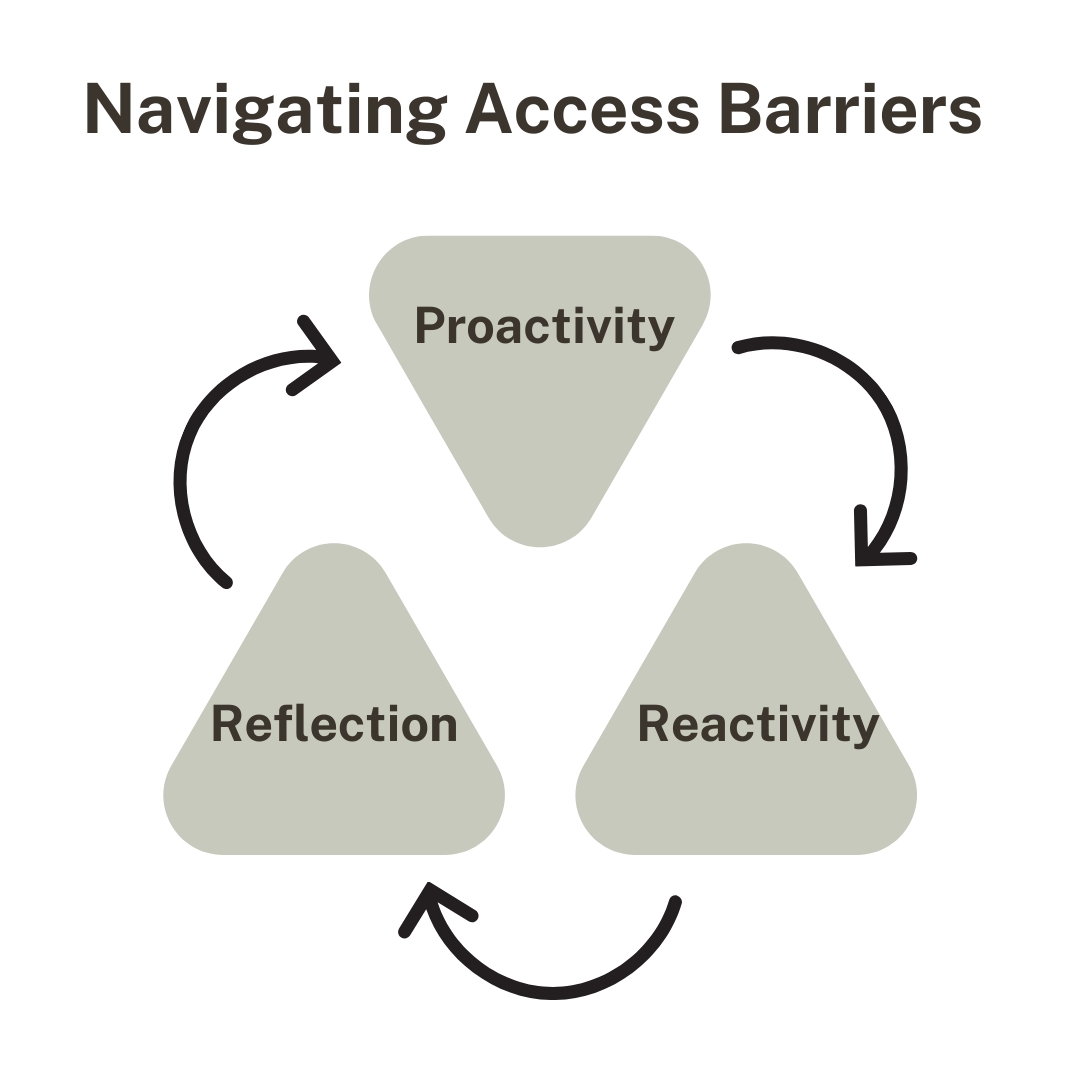
Figure 1. “Navigating Access Barriers”. Katherine Carlson
- Proactivity is the pre-trip planning aspect of the framework. Proactive planning takes place before a given encounter or situation. Proactivity can help equip both staff and users with the tools to successfully navigate, or really mitigate, potential barriers. Some questions to ask in this step might be as follows: Can users easily access information? Do users know where to find help? Is help intuitively located on the website? Is our space ADA compliant? What are the potential access barriers?
- Reactivity is the real-time, in-the-moment navigation. As you likely know from experience, all scenarios and potential barriers to access cannot be anticipated; therefore, reactivity is a key component of this framework. When one is made aware of an access barrier, how do they respond in the moment? Staff have control over more than they think they do, such as language, demeanor, or adapting the approach in the middle of an interaction with a user. When we are communicating or interacting with a user, both parties are reacting to different signs, messages, and signals that are being sent between receiver and encoder, user and staff. During this in-the-moment navigation, one might ask themselves the following questions, some of which are internal reflections on personal behaviors and postures: How am I responding right now? What is my demeanor or posture at this moment? What resources are available at my institution? What are the core values of the institution and the profession?
- Reflection is the post-trip processing and the process of evaluating and reflecting on an experience navigating an access barrier with a user. This component is as important as the previous two and may be often overlooked amidst the daily demands of the profession. After navigating an access barrier with a user, one must reflect and learn from the experience. The process of reflection will inform future navigation and encounters, continuing to feed this cycle. Questions to ask in this phase could include the following: What feedback did the user provide? What new access barriers have been highlighted? How does this inform future encounters?
Motivation Checkpoint
Before delving into more specifics of this framework and presenting concrete examples, it is important to ground the conversation in my motivation for this framework: empathy. It is of the utmost importance that informational professionals, especially staff in user-facing roles, access empathy for their user base. Libraries often maintain a shared goal of creating welcoming, helpful environments in which users feel a sense of belonging. Empathy is argued to be one of the key factors in creating this inclusive and welcoming culture (Bodaghi et al., 2016; Phillips, 2017). Before staff have the chance to assist a user or before staff are even made aware of a barrier, users have likely encountered or navigated many of these barriers on their own. The process, while seemingly cumbersome perhaps, of naming potential barriers can help staff empathize with their users. This empathy can help staff proactively address some barriers and empathetically work with users as they encounter and navigate these barriers together. Empathy has a significant impact on a situation and it is important to keep it at the center of this conversation as a core motivator.
Proactivity
With empathy at the center of the framework, we are ready to delve into specific components of the framework, beginning with proactivity. Proactively addressing and navigating barriers is acknowledged to be an important step in establishing more accessible and inclusive spaces (Kimball et al., 2016). An important way to provide proactive support and to proactively prepare to navigate access barriers with users is to anticipate and think about what those access barriers may be. If there is awareness of potential barriers, there is an opportunity to address them or put protocols in place before the user encounters the potential barrier. To get a sense of and brainstorm what these barriers may be, I propose four different categories that capture a significant range and number of these barriers. These are not intended to be comprehensive but rather to provide insight into the variety of barriers that users encounter on a daily basis when seeking library services. The four general categories of access barrier are physical, logistical, psychological, and cultural.
Physical Access Barriers
Physical access barriers are any tangible, concrete, corporeal, or environmental obstacle that a user may encounter (CDC, 2025). Physical access barriers encompass a large range of potential barriers. One example of this type of barrier could be location. A user could be located in another state and seeks access to materials in the collection, and if these materials are not already digitized, this is a barrier. If these materials cannot be digitized, that is also a significant barrier. But a user does not have to be located in another state for location to be a barrier. They may be physically local but do not have reliable transportation. The location of the resource or service itself can be an access barrier. Is there accessible parking? Another example could be the various structural conditions of accessing resources or services. Is the building ADA compliant? Website accessibility can be considered a potential physical barrier. Virtual encounters with resources and services warrant a conversation of their own, but the discoverability of the resources, website navigability, ease of finding and accessing help, are all potential physical barriers.
Logistical Access Barriers
Accessing library resources and services can be highly organized, structured processes that often require careful planning for an encounter, from all parties involved, both user and staff. Some examples of a logistical barrier could be the hours of the library, availability of appointments, knowing the preferred order of operations, and planning for or requesting accommodations. While every library has potential for logistical barriers, more restricted libraries and collections have increased barriers in this category (Dreyer & Nofziger, 2021). The logistical barriers will vary significantly across institutions and spaces, and it is important to identify what they may be.
Psychological Access Barriers
Like many barriers already named, staff may not be fully aware of all psychological barriers that a user might encounter. Psychological barriers are often discussed around the well-known concept of library anxiety, and it remains important to identify the components contributing to this phenomenon (Blecher-Cohen, 2019). An example of a psychological barrier could be general apprehension or uneasiness. This barrier could affect a user’s ability to navigate new experiences and spaces, especially spaces that have very particular policies and protocols. Another is distrust. This can apply to many different institutions and spaces, but particular institutions, resources, or services may be a new concept to users, especially new users, and any potential distrust that a user might have can affect their ability to interact. Additionally, there are general misperceptions that users may have. There are a range of perceptions or misperceptions that a user may have about a particular space, resource, or service, and these could certainly be access barriers.
Cultural Access Barriers
This is a large category that could include many of the aforementioned barriers, but they still warrant a category of their own. Every potential user is coming from a particular context with particular behavioral expectations, ideals and beliefs, and languages, and different library spaces have their own particular culture as well. Learning a new culture can be an access barrier in and of itself, but more specific examples would be knowing and adhering to expected/appropriate behaviors, the primary language of the staff and collections, and the customs and norms of library culture. One’s cultural context affects most aspects of how they navigate situations and spaces, and it is important to remember potential cultural barriers (Mestre, 2010; Overall, 2009). It is especially important to situate oneself in one’s context. People become very accustomed to the customs, norms and language (including language of the trade, like words, phrases or concepts that are common for those familiar with or that work within libraries) that may be barriers for those who are new to the cultural context of a library space.
Reactivity
As informational professionals know, especially those working in user-facing roles, one cannot anticipate and mitigate every potential barrier. Staff will often find themselves becoming aware of a barrier for a user and navigating that barrier in real-time. While reactivity is hard to prepare step-by-step plans for, there are ways one can be prepared to react in the moment. There are three core components that are necessary for these in-the-moment interactions: values, resources, and posture.
Awareness of Values
Awareness of one’s personal values, the values of the institution within which they are working and the values of the profession (American Library Association, 2024), in this case information services, is essential. There will be times when these values may be in conflict. In general, navigating access barriers could be and will be tricky. This is not necessarily easy work, but it is important and knowing these values provides a foundational motivation and rationale for this potentially difficult work. Remembering why is essential, and an awareness of your personal and professional values helps identify this (Burd, 2003; Koehler et al., 2000; Scott & Saunders, 2021).
Know Your Resources
When navigating an access barrier with a user in the moment, it is helpful to have awareness of the resources available at the institution. What resources are available within the unit and within the institution broadly speaking? General awareness of these resources can provide guidance for the steps staff take while navigating a barrier with a user. This is especially important when accommodations are needed. When barriers are encountered, one will likely not always know exactly how to navigate those barriers right away but having an awareness of the available resources and where to find resources at their institution will help.
Posture: Staying Attentive
All staff, regardless of position or role, should stay attentive to and aware of their posture when interacting with users. One’s attitude towards navigating access barriers will greatly impact the way in which they approach a situation in which they are made aware of an access barrier for a user. Even in instances when staff cannot provide the exact service a user is looking for or if staff encounter difficulty or barriers when providing a service, they can still provide an excellent customer service experience for the user. This excellent experience is largely dependent on the posture of the employee. Prioritizing empathy and listening are two essential postures that will guide staff when navigating any and all access barriers (Phillips, 2017; Tustonja et al., 2024; Williams et al., 2024). Empathy is important when trying to imagine what the user is experiencing. Consider how the user might be feeling. Prioritizing listening is equally as important in ensuring that staff are fully understanding the user and not imposing or projecting their own experience onto theirs. When becoming aware of one’s posture, prioritizing listening and empathy can go a long way when navigating barriers in-the-moment.
Reflection
Lastly, there is the necessary process of evaluating and reflecting on an experience navigating a barrier with a user. It is no secret that library staff are busy people, and the nature of this work often has staff moving swiftly from one task or situation to another. As a result, the process of intentional reflection is often unintentionally dismissed in the daily hustle and movement of the job. While time persists as a difficult barrier for reflection, prioritizing the time to learn from experiences like this will further equip us for future experiences. Incorporating reflective practice into the different fields and specialties within information services has gained traction in recent years and is argued to have a wide range of benefits for individuals, teams, and institutions more broadly (Grant, 2007; Greenall & Sen, 2016; Jocz & Fitzhugh, 2025; Miller, 2020). There exist many helpful models of reflection that could be applied in the library profession. While many of these may seem overwhelming at first glance, Jennifer Jocz and Ginger Fitzugh identify three core models that capture the essential components of the many varied models and can be applied within an information services setting: Rolfe, Freshwater, & Jasper’s Model of Critical Reflection, Kolb’s Learning Cycle, and Gibb’s Reflective Cycle (Jocz & Fitzhugh, 2025):
Rolfe, Freshwater, & Jasper’s Model of Critical Reflection
This model distills reflective practice to three essential questions: What? So What? Now What? (Rolfe et al., 2001). Originally developed for health care professionals, these questions can be and have been applied to many disciplines. These three questions help guide one through factual descriptions, analysis, and future actions based on the description and analysis.
Kolb’s Learning Cycle
Kolb presents four cyclical stages of learning: concrete experience, reflective observation, abstract conceptualization, and active experimentation (Kolb, 1984). Using this model, staff follow similar steps as the previous model, describing an event or situation, analyzing the experience, conceptualizing how to approach the situation in the future, and then implementing those ideas.
Gibb’s Reflective Cycle
Offering more prompting and stages than the previous two models, Gibb’s Reflective Cycle presents six steps: description (what happened?), feelings (what were you thinking and feeling?), evaluation (what was good? what was bad?), analysis (making sense of the situation), conclusion (what else could be done?), and action plan (what could I do differently next time?) (Gibbs, 1988).
All of these models can offer more detailed questions and guidance through reflection. Choosing a set of questions, whether inspired by one of the above models or something entirely different, can help prepare you and your staff to reflect on encounters with users.
Examples
Proactivity in Action
When presenting a generalized framework for navigating access barriers, it is important to make concrete these ideas and concepts. In this section, I wish to prompt our collective curiosities with a series of questions and suggestions. The intention of this section is to provide basic examples as a starting point for individual brainstorming. Consider the following examples and contemplate examples for your particular library and context.
Proactively Navigating a Logistical Barrier
One example of proactively navigating a logistical barrier is anticipating and addressing the logistical barriers unique to your setting. What logistical information does a user need to plan an encounter with your library’s resources and services? Do they need to schedule an appointment? Do they need to visit during particular hours? These necessary logistics should be readily available and clearly communicated to users prior to their visit. One way to approach this is a “Know Before You Visit” page on the library’s website. Consider the potential logistical barriers for your setting. What can you do to mitigate these barriers for your users?
Proactively Navigating a Physical Barrier
An example of proactively navigating a physical barrier is assessing your library’s physical space for ADA compliance or completing an accessibility audit of your website (and making any necessary changes that are surfaced). It is important to assess your space in this way proactively rather than waiting to react when a user encounters a physical barrier. While necessary changes may encounter barriers of their own, especially when they necessitate costly renovation, try to focus on small, actionable steps. Consider an accessibility checklist for your space.
Reactivity in Action
Cultural Barriers
Examples of navigating a cultural access barrier in-the-moment would be kindly and consistently communicating behavior expectations or adapting communication formats in cases of language differences. Not all communication is best completed on the phone, but in some instances, the inverse is true. Library staff are often in situations where they need to identify these realities and adapt quickly in the moment. Consider the ways that your library’s specific culture may present barriers to new users.
Psychological Barriers
Examples of reacting in-the-moment when made aware of psychological barriers would be maintaining a welcoming and patient demeanor or taking the time to listen and understand a user’s concerns. If a user senses that they are becoming an inconvenience, they may experience heightened feelings of worry or unease. Consider the ways users might experience unease or anxiety when entering your space or interacting with staff.
Reflection in Action
Here are a few examples of reflection when navigating access barriers. First, consider providing opportunities for user feedback. It is important to make the process of providing feedback as easy as possible, and offering different methods of providing feedback is helpful as well. Not all users will prefer the same methods for providing feedback. Second, consider establishing a system for reflection. For example, have a checklist or list of questions prepared to ask yourself or your team after an experience navigating a barrier with a user. While this may not apply the same way in every scenario, it will help create the habit of reflecting and learning from experiences.
Conclusion
While the seemingly infinite number of potential barriers for potential users may seem overwhelming and difficult to adequately anticipate, there are steps that library staff can take to prepare to navigate access barriers with users. Through proactive planning, equipping oneself with tools for in-the-moment reactions, and prioritizing the process of learning from experiences, library staff can hopefully feel more equipped. There are four key takeaways from this framework for navigating access barriers:
- Navigating access barriers requires more than “in the moment” action.
- It is important to remember that users may encounter barriers to access before they reach library staff.
- One’s motivation and demeanor is of the utmost importance, and empathy must stay at the core.
- You can do it! Start small and always seek to learn from both your experiences and the experiences of your colleagues.
References
American Library Association. (2009). Services to People with Disabilities: An Interpretation of the Library Bill of Rights. Adopted January 28, 2009, amended June 26, 2018. Chicago: American Library Association. https://www.ala.org/advocacy/intfreedom/librarybill/interpretations/servicespeopledisabilities
American Library Association. (2019). Access to Library Resources and Services. Chicago: American Library Association. https://www.ala.org/advocacy/intfreedom/access
American Library Association. (2024). Core Values of Librarianship. Chicago: American Library Association. https://www.ala.org/advocacy/advocacy/intfreedom/corevalues
Baines. (2023). Establishing special collections literacy for undergraduate students: an investigation into benefits and barriers of access. Archives & Records: The Journal of the Archives & Records Association, 44(1), 8–35. https://doi.org/10.1080/23257962.2022.2149481
Blecher-Cohen, Z. (2019). The Student Connection: Thinking Critically on Library Anxiety and Information Literacy. Public Services Quarterly, 15(4), 359–367. https://doi.org/10.1080/15228959.2019.1664361
Bodaghi, N. B., Cheong, L. S., & Zainab, A. N. (2016). Librarians Empathy: Visually Impaired Students’ Experiences Towards Inclusion and Sense of Belonging in an Academic Library. The Journal of Academic Librarianship, 42(1), 87–96. https://doi.org/10.1016/j.acalib.2015.11.003
Bodaghi, N. B., Cheong, L. S., & Zainab, A. N. (2016). Librarians Empathy: Visually Impaired Students’ Experiences Towards Inclusion and Sense of Belonging in an Academic Library. The Journal of Academic Librarianship, 42(1), 87–96. https://doi.org/10.1016/j.acalib.2015.11.003
Burd, B. (2002). Work Values of Academic Librarians: Exploring the Relationships between Values, Job Satisfaction, Commitment and Intent to Leave.
Çakmak, T., & Uğurlu, E. (2025). Accessibility in academic libraries: An evaluation of conditions and practices of twelve academic libraries in Türkiye. Journal of Academic Librarianship, 51(3). https://doi.org/10.1016/j.acalib.2025.103056
CDC. (2025, April 3). Disability Barriers to Inclusion. Disability Inclusion. https://www.cdc.gov/disability-inclusion/barriers/index.html
Dreyer, R., & Nofziger, C. (2021). Reducing Barriers to Access in Archival and Special Collections Public Services. Pennsylvania Libraries: Research & Practice, 9(1), 37–48. https://doi.org/10.5195/palrap.2021.237
Falloon, K. A. and O’Reilly, F. M. (2020). “Prioritizing Accessibility in the E-Resources Procurement Lifecycle: VPATs as a Practical Tool for E-Resource Acquisitions and Remediation Workflows at Academic Libraries,” The Serials Librarian, 78(1-1), 130–140. https://doi.org/10.1080/0361526X.2020.1722020
Fernandez, M. (2018). “How Accessible is Our Collection? Performing an E-Resources Accessibility Review,” The Serials Librarian, 74(1-4), 81–86. https://doi.org/10.1080/0361526X.2018.1430424
Gibbs, G. (1988). Learning by doing: A guide to teaching and learning methods. Further Educational Unit, Oxford Polytechnic.
Grant, M. J. (2007). The role of reflection in the library and information sector: A systematic review. Health Information & Libraries Journal, 24(3), 155–166. https://doi.org/10.1111/j.1471-1842.2007.00731.x
Greenall, J., & Sen, B. A. (2016). Reflective practice in the library and information sector. Journal of Librarianship and Information Science, 48(2), 137–150. https://doi.org/10.1177/0961000614551450
Harrington, C., Haggerty, K. C., & Scott, R. E. (2022). Usability Studies in the Electronic Resource Lifecycle. The Serials Librarian, 82(1–4), 164–170. https://doi.org/10.1080/0361526X.2022.2018229
Jocz, J., & Fitzhugh, G. (2025). Through the Looking Glass: Building Reflective Practice into Data Collection with Public Librarians. Visitor Studies, 28(1), 142–155. https://doi.org/10.1080/10645578.2025.2500245
Kimball, E., Vaccaro, A., & Vargas, N. (2016). Student Affairs Professionals Supporting Students with Disabilities: A Grounded Theory Model. Journal of Student Affairs Research and Practice, 53(2), 175–189. https://doi.org/10.1080/19496591.2016.1118697
Koehler, W. C., Hurych, J. M., Dole, W. V., & Wall, J. (2000). Ethical Values of Information and Library Professionals—An Expanded Analysis. The International Information & Library Review. https://www.tandfonline.com/doi/abs/10.1080/10572317.2000.10762533
Kolb, D. A. (1984). Experiential learning: Experience as the source of learning and development. Prentice-Hall.
Mestre, L. S. (2010). Librarians Working with Diverse Populations: What Impact Does Cultural Competency Training Have on Their Efforts? The Journal of Academic Librarianship, 36(6), 479–488. https://doi.org/10.1016/j.acalib.2010.08.003
Miller, J. M. (2020). Reflective practice and health sciences librarians: Engagement, benefits, and barriers. Journal of the Medical Library Association : JMLA, 108(1), 17–28. https://doi.org/10.5195/jmla.2020.777
Overall, P. M. (2009). Cultural Competence: A Conceptual Framework for Library and Information Science Professionals. The Library Quarterly, 79(2), 175–204. https://doi.org/10.1086/597080
Phillips, A. (2017). Understanding empathetic services: The role of empathy in everyday library work. Journal of Research on Libraries & Young Adults, 8(1), 1–27.
Pipkin, S. (2024). Encouraging People Through the Doors: Surveying Public Perceptions of Special Collections Libraries. Journal of Library Administration, 64(3), 275–297. https://doi.org/10.1080/01930826.2024.2316520
Rolfe, G., Freshwater, D., & Jasper, M. (2001). Critical Reflection for Nursing and the Helping Professions: A User’s Guide. Palgrave MacMillan.
Sanchez-Rodriguez, N. A., & LoGiudice, J. (2018). Building bridges: Fostering dynamic partnerships between the library department and office of student disability services in higher education. Journal of Access Services, 15(4), 142–160. https://doi.org/10.1080/15367967.2018.1520640
Scott, D., & Saunders, L. (2021). Neutrality in public libraries: How are we defining one of our core values? Journal of Librarianship and Information Science, 53(1), 153–166. https://doi.org/10.1177/0961000620935501
Tustonja, M., Stipić, D. T., Skoko, I., Čuljak, A., & Vegar, A. (2024). Active Listening – A Model of Empathetic Communication in the Helping Professions. Medicina Academica Integrativa, 1(1), 42–47.
Williams, R. D., Dumas, C., Ogden, L., Flanagan, J., & Porwol, L. (2024). Virtual reality training for crisis communication: Fostering empathy, confidence, and de-escalation skills in library and information science graduate students. Library & Information Science Research, 46(3), 101311. https://doi.org/10.1016/j.lisr.2024.101311
Zuniga, H. (2022). Accessibility and E-Resources: Why It Matters and What You Can Do. The Serials Librarian, 82(1–4), 103–108. https://doi.org/10.1080/0361526X.2022.2018207