Heejoung Shin
Clinical Assistant Professor and Digital Scholarship Librarian
Digital Scholarship Hub, University of Illinois Chicago
Abstract
This article attempts to bring academic library makerspaces into conversation with digital scholarship by attending to their shared methods and methodologies: focus on process and labor, iterative making through the mediation of digital technology, interdisciplinary collaboration, and reflective pedagogy and practice. The relationship between academic library makerspaces and digital scholarship has been underexplored, with fabrication activities placed as adjacent to, rather than constitutive of, digital scholarship or treated as separate from discussions of the field, digital scholarship. Using the Digital Fabrication Lab at the University of Illinois Chicago Library, situated in an R1 research university, as a case study, the article aims to demonstrate how makerspaces can operate as indispensable components in library-led digital scholarship when its operations are structured through equity-centered program design and reflective and critical pedagogy and practice. The article first outlines a brief history of the DFL, followed by a review of relevant literature on the relationship between makerspaces and digital scholarship. It then traces the DFL’s strategic evolution, including the development of its governing philosophy, and presents three examples that illustrate digital scholarship in practice in the academic library makerspace. Although grounded in the context of an academic library, the pedagogical model proposed here may also offer useful implications for school and public library makerspaces, particularly because curiosity and habits of inquiry that underpin research often begin well before learners enter higher education.
Preface
This project began with a recognition of the dual nature of making: making involves challenging existing modes of thinking and crossing established boundaries. In academic libraries, digital scholarship and makerspace are independent units, rarely coming into contact with each other. I acknowledge that, in an attempt to bring these two fields into conversation, I may also be imposing another boundary on the heterogeneous and diverse practices of library makerspaces, which could be potentially restrictive.
Introduction
Over the past couple of decades, academic libraries have increasingly supported data-driven research and instruction. In this shifting environment, digital scholarship has emerged as a field in which libraries play a key role, facilitating research, instruction, and learning by guiding students and faculty to integrate digital tools, methods, and methodologies. Around the same period, makerspaces – based on 3D printers and laser cutters – have become visible components of academic libraries. Despite their growing presence, however, much of the existing scholarship emphasizes access, innovation, or experimentation, while comparatively less attention has been paid to how academic library makerspaces function as pedagogical and practice-based infrastructures to support research, instruction, and learning in a harmonious relationship with other library units and campus collaborators.
This article attempts to bring academic library makerspaces and the field of digital scholarship into conversation by attending to their shared methods and methodologies that emphasize experimental and collaborative learning, process and labor, and reflective practice. To date, the relationship between library makerspaces and digital scholarship has been underexplored, with fabrication activities frequently placed as adjacent to, rather than constitutive of, digital scholarship or treated as separate from discussions of the term digital scholarship itself. Using the Digital Fabrication Lab at the University of Illinois Chicago Library as a case study, the article attempts to show how makerspaces can serve as a central component of the library’s digital scholarship initiatives when its pedagogies and operations are structured with their shared similarities in mind. The article first outlines a brief history of the DFL, followed by a review of relevant literature on the relationship between makerspaces and digital scholarship. It then traces the DFL’s pedagogical steering, including the development of its governing philosophy, and presents examples of projects that illustrate digital scholarship in practice in the DFL. In so doing, this article aims to shed light on library makerspaces in the face of strategic pedagogical transformation.
Background: A Brief History of the Digital Fabrication Lab
The Digital Fabrication Lab is one of two laboratories within the UIC Library’s Digital Scholarship Hub, along with the Digital Scholarship Lab. It was established in February 2020 with a suite of equipment, following trends in engineering makerspaces at the time: five 3D printers, a laser cutter, sewing and embroidery machines, a vacuum-forming machine, a CNC machine, a vinyl cutter, a large-format printer, and hand tools. Shortly after its launch, however, the DFL faced an abrupt disruption due to the COVID-19 pandemic, which forced campus closures in Spring 2020. As a result, the DFL had difficulty building early growth. While some virtual workshops on software such as SolidWorks and TinkerCAD were taught between Fall 2021 and Spring 2022 by graduate assistants from the DSL, these efforts were upon request and sporadic.
The DFL reopened for in-person use in Spring 2022. Until the end of Spring 2024, it operated as a service unit staffed by undergraduate students. The student staff provided 3D printing services for patron-submitted prototypes, whether downloaded from online repositories or designed by patrons themselves. While this model enabled basic access to fabrication tools, it did little to cultivate active learning among patrons, foster meaningful collaboration between patrons and student staff, or accomplish research goals. Students and faculty remained passive users or hobbyists, while student employees worked in isolation, managing print jobs. Even when student employees undertook substantial design modifications to make files printable, their hard labor and expertise went unnoticed. In short, the DFL lacked a pedagogical identity.
These challenges were further complicated by the fact that the DFL is situated in a large R1 academic institution serving a racially and culturally diverse, first-generation student and faculty population, and in a city with multiple competing makerspaces. At the University of Illinois Chicago, for example, the College of Engineering has its own makerspace equipped with high-tech fabrication technologies to support faculty and student research and coursework. It also maintains a partnership with mHUB, a large-scale manufacturing facility that allows engineering students free access and supports startup incubation, corporate innovation, venture capital, research, and philanthropy. The College of Engineering is not the only one with its dedicated makerspace. UIC’s College of Education operates its own makerspace, the Make Good Lab. This lab focuses on low-tech digital and material making oriented towards teacher education and community engagement. Similarly, the College of Art, Design, and Architecture’s Fab Lab supports course-based projects and creative production for CADA students and faculty. Outside of the university, the Chicago Public Library’s Maker Lab at the Harold Washington Library Center offers Chicago residents free public access to fabrication tools and workshops with an emphasis on lifelong learning. Chicago’s maker ecosystem also includes community spaces like Chicago Maker Space, a membership-based makerspace that supports individual artists and makers through access to work studios. In this heterogeneous landscape, the pedagogical identity of UIC Library’s Digital Fabrication Lab was unclear. Patrons frequently questioned whether the DFL was a print shop serving library faculty and staff or a production shop for giveaway items for UIC-affiliated individuals. The DFL’s ambiguous identity limited campus-wide research and instructional engagement.
Literature Review: Academic Library Makerspaces and Digital Scholarship
Academic Library Makerspaces
Discussions of academic library makerspaces, in fact, emerged in the 2010s in response to calls for creative and experimental learning, technological innovation, and user engagement, modeling on public libraries’ makerspaces (Moorefield-Lang, 2015; Slatter and Howard, 2013). The earliest studies focus on building physical infrastructure, including space planning, equipment selection, and user access (Burke, 2018). Scholarship mainly took the form of case studies that justify makerspaces in academic libraries and document the planning and implementation of 3D printing services based on surveys and interviews (Gonzalez and Bennett, 2014; Groenendyk, 2013). These efforts led to the development of student or “staff-mediated service models,” in which patrons submit prototype files in STL format, and library workers handle printing (Nagle, 2021, p. 187). Subsequent stages of early infrastructure development emphasize the creation of policies and user guidelines, along with the development of introductory workshops and assessment tools through which students and faculty can learn the basics of fabrication technologies (Burke, 2018; Cun et al., 2019; Stephens et al., 2021). During this phase, academic library makerspaces were often portrayed as extensions of information commons or learning labs (Burke, 2018; Association of Science-Technology Centers and Urban Literacies Council, 2014). These initial stages were geared toward providing users with access and opportunities for exploration, generating awareness and excitement about emerging technologies.
As academic libraries became more confident in operating makerspaces, practitioners began to consider their potential role in instruction. A notable example was the Maker Literacies project launched in 2018 at the University of Texas at Arlington Library. This project sought to develop national standards for incorporating maker literacies into undergraduate curricula (Wallace et al., 2018). These literacies, primarily shaped by the collaboration between the library and STEM faculty, include teamwork, project and time management, domain knowledge, awareness of legal and socio-economic issues surrounding making, and the ability to transfer learned skills to real-world situations (Nagle, 2021, p. 185). Indeed, studies examining the role of library makerspaces in supporting STEM education and interdisciplinary collaboration became prevalent during this period (Bevan et al., 2015; Burke 2018). Across library sectors – public, academic, and school libraries – librarians teaching science and technology began positioning makerspaces as a unique pedagogical opportunity to teach information literacy concept, drawing on the American Library Association’s definition of information literacy as “a set of abilities requiring individuals to recognize when information is needed and have the ability to locate, evaluate, and use effectively the needed information” (Mann, 2018; ACRL, 2016, p. 2). In this literature, the most frequently emphasized form of literacy is “technology literacy,” often defined through “competencies related to creativity and innovation”; “communication and collaboration”; “research and information fluency”; “digital citizenship”; “technology operations and concepts” (Mann 2018, pp. 83-4). Whereas much of this work underscores the pedagogical power of makerspaces, another line of scholarship has consistently cautioned that STEM-dominant makerspaces reinforce inequities by privileging users with economic advantage and prior technical experience or by reducing making to novelty or productivity, unless thoughtful attention is paid to gendered, racial, cultural, and class disparities (Vossoughi et al., 2016; Benjamin, 2019). These critiques call for more reflective and equity-based makerspace models within academic libraries.
Digital Scholarship in Academic Libraries
The rise of academic library makerspaces in the 2010s coincided with the emergence of digital scholarship as both a term and a field of inquiry in the Library and Information Science. From its inception, digital scholarship has been discussed primarily in relation to humanities research and the field’s engagement with text/data analysis and technology-driven inquiry, new media studies and forms of representation, and scholarly communication and digital publishing (Bryan et al., 2018; Posner, 2016; Flanders, 2013; Burdick and Willis, 2021). While individual definitions may vary, digital scholarship is broadly understood as the use of digital tools, “methods (techniques for collecting data), and methodology (a theory and analysis of how research does or should proceed),” to enhance research, instruction, and learning in ways that traditional approaches alone cannot (Harding 1987, p. 3; Esposito, 2013). In this field, library-led digital scholarship initiatives are characterized by the development of infrastructure – such as the digitization of analog and archival materials into machine-readable formats, development of digital collections and research platforms – as well as by the facilitation of methodological experimentation and the integration of digital tools into research and instruction through collaborative models of practice (Martin, 2016). In short, although emphases may vary across academic libraries, digital scholarship consistently foregrounds infrastructure, interdisciplinary collaboration, process, and digital labor as central to scholarly practice (Fisher, 2025; ALA Framework for Information Literacy for Higher Education, 2026).
In efforts to advance digital scholarship initiatives across campus, library practitioners have constantly underscored the need for libraries to articulate and communicate their central role in coordinating often fragmented disciplinary-specific digital scholarship projects for diverse internal and external constituencies (Fallon et al., 2019). Other researchers have critiqued the ways in which the digital labor required to support these initiatives – including creation, maintenance, instruction, coordination, and ongoing upkeep – has often been insufficiently acknowledged and, in some cases, rendered invisible within institutional structures (Risam, 2018; Fischer, 2025; Rahman and Sultana, 2025). Still other work highlights libraries as essential collaborators and mediators of digital scholarship in providing not only technical infrastructure and support but also domain expertise, project management, and ethical guidance (Cox, 2019). To summarize, this literature views digital scholarship as encompassing a wide range of scholarly activities and practices, including data-intensive, multimodal, and digitally mediated forms of inquiry.
Toward a Pedagogical Model of Makerspace as Digital Scholarship
As the literature above demonstrates, STEM-based library makerspace projects have increasingly engaged in reflection and critique regarding practices that overemphasize technology. At the same time, humanities-based digital scholarship in libraries has turned toward greater engagement with data and digital methods. In other words, these two areas, seemingly perceived as different, have been moving toward each other. Despite this convergence, library makerspaces have rarely been identified as sites of scholarship in their own right or discussed in direct relation to digital scholarship. Even when connections between makerspaces and digital scholarship are made, they tend to remain implicit, through assertions that fabrication tools can support humanities projects through “design praxis and design-related tasks” (Wallace et al., 2018, p. 3). Such positioning could reinforce narrow assumptions that digital scholarship is limited to the humanities while makerspaces are still mainly useful for STEM-oriented applications and only tangentially connected to humanistic inquiry. When both makerspaces and digital scholarship are understood more capaciously beyond discipline-specific discourses within academic libraries, their relationship becomes clearer, not only in terms of what they perform but also in the shared methods and methodologies that emphasize infrastructure building, process and labor, interdisciplinary collaboration, and critical reflection.
Indeed, digital scholarship’s focus on infrastructure, process, interdisciplinarity, labor, and experimentation closely parallels the ways digital fabrication practices foreground infrastructure, iterative making, collaboration, and material engagement, as articulated by Mark Hatch (2013) as the spirit of making. Although rooted in the hobbyist tradition, not in academic scholarship, Hatch’s The Maker Movement Manifesto merits attention for articulating the foundational values and ethos of makerspaces. Among its nine principles, the following six, in particular, embody methods and methodologies common to digital scholarship.
- Sharing what you have made and what you know about making with others is the method by which a maker’s feeling of wholeness is achieved.
- You may become a journeyman or master craftsman, but you will still learn, want to learn, and push yourself to learn new techniques, materials, and processes.
- You must have access to the right tools for the project at hand.
- Be playful with what you are making.
- Making is a movement, and it requires emotional, intellectual, financial, political, and institutional support.
- Embrace the change (Hatch 2013, pp. 1-2).
Remarkably, Hatch’s emphasis on sharing knowledge, continual learning, access to tools, playfulness, institutional support, and embracing change in the tradition of making resonates with the core principles of digital scholarship. Sharing knowledge and making with others foregrounds collaboration as a mode of knowledge production, while the continual pursuit of new techniques, materials, and processes corresponds to digital scholarship’s attention to methodological experimentation and ongoing inquiry. Access to tools and equipment underscores the importance of physical and technical infrastructure in enabling scholarly activities, while playfulness connects making to pedagogical approaches such as guided play and active learning, which encourage exploration and experimentation in digital scholarship. At the same time, the call for affective, intellectual, financial, political, and institutional support highlights the importance of advocacy and institutional commitment to cultivating scholarly communities. Last, embracing change represents a commitment to critical reflection and ongoing development of methods and practices in response to emerging technologies and evolving scholarly needs. In short, these principles suggest that makerspace activities and digital scholarship are akin in their shared commitment to building open infrastructure and collaborative, experimental, and iterative models of knowledge production.
In fact, a growing body of makerspace scholarship, including work by Library and Information Science professionals, has increasingly emphasized the critical reflection and reexamination of makerspaces’ own practices, building upon Hatch’s foundational contribution. Vossoughi et al. (2016) caution against the maker movement’s rhetoric of openness and technological vision, as advocated by Nascimento and Polvora (2018), for obscuring structural inequities that impact who feels entitled and welcomed. In a similar vein, Nichols (2020) rejects the notion that makerspaces are neutral learning environments. Drawing on Selwyn’s (2016) critique of how innovation is commonly understood as “novel technologies and strategies intended either to optimize internal processes of schooling, or to help education keep pace with external demands of a changing world,” Nichols challenges the assumption that the rhetoric of innovation underpinning the maker movement is inherently progressive (2020).
Bossart et al.’s (2021) “3D Printing Filament Recycling for a More Sustainable Library Makerspace” is another important stream of makerspace scholarship intervening in the waste generated by 3D printers in academic library makerspaces (Bossart et al. 2021). It explores the possibilities and limitations of recycling plastic waste from failed prints and the printing process itself to produce new filaments. Indeed, this study, along with the growing industry of recycled filaments, draws attention to the environmental implications of 3D printing, the very service offered by makerspaces to facilitate research, learning, and creativity, raising a critical caution that expanding access to digital fabrication tools is not sufficient in itself. The waste generated and resources consumed during fabrication must also become subjects of pedagogical and operational consideration, just as, more recently, digital scholarship has turned its attention to issues such as environmental sustainability and forms of exploitation associated with emerging AI infrastructures and data centers.
How then might these critical concerns raised in makerspace scholarship inform the instructional and service models of academic library makerspaces and bring their practices into conversation with digital scholarship? The next subsection addresses this question through the example of the UIC Library’s Digital Fabrication Lab (DFL), examining how critical reflection on maker practice and equity-centered approaches can inform its pedagogical and operational practices. It first outlines the groundwork for this strategic steering by tracing the DFL’s operational transformation and the establishment of its guiding philosophy, and illustrates the kinds of projects the DFL can meaningfully support within the heterogeneous makerspace landscape at UIC and in the City of Chicago.
Operational Change
A turning point for the UIC Library’s Digital Fabrication Lab was Fall 2024, when new service and instructional models were implemented under the leadership of the Digital Scholarship Librarian, whose role expanded to encompass the DFL, in addition to the Digital Scholarship Lab, where she had been developing workshop curricula for text and data analysis and podcast and new media design. This shift created an opportunity to rethink the DFL’s pedagogical identity in relation to digital scholarship, marking the beginning of a strategic expansion toward a more programmatic and pedagogical approach. This transition was not without challenges. The DFL inherited fragmented documentation, inconsistent user guidelines and policy, and few mechanisms for assessment. Prior to Fall 2024, the two labs operated in isolation; team meetings and communication channels were separate. Neither did student staff roles and responsibilities overlap, nor did they often have a clear understanding of the other lab’s work, services, or pedagogical goals. This separation made it difficult to establish shared standards, coordinate programming, or articulate a cohesive mission across the Digital Scholarship Hub.
To address these challenges, a new operational system was first implemented across the Digital Scholarship Hub in Fall 2024. To establish a more robust and sustainable operational model, several changes were introduced, including regular cross-lab team meetings and cross-training in the tools, methods, and methodologies supported by both labs, an official communication channel using Microsoft Teams, a 35-page comprehensive employee handbook governing both labs, and shared project-management spreadsheets for transparency and accountability. In addition, a new mentoring model was implemented in which student staff receive structured training in instructional design and Universal Design for Learning (UDL) and are assigned research projects each semester that apply equity and sustainability-centered design praxis to real-world problems. Underlying this transformation was the recognition that digital fabrication, similar to text and data analysis and new media design, involves exploring how emerging technologies can be integrated into research, instruction, and learning in ways that can be exploitative when implemented without care, but also liberatory when approached critically. In other words, the strategic shift homes in on the recognition that digital fabrication could be understood as a form of digital scholarship that demands a shared pedagogical and operational framework across the two labs. In their entity, these changes were not only for improving the operational efficiency of the DFL but also for fostering a shared sense of identity, purpose, and collective responsibility among student staff in the Digital Scholarship Hub.
Development of a Guiding Philosophy
As the operations of the Digital Fabrication Lab improved and student staff expertise continued to develop, the next stage of development required an explicit guiding philosophy capable of aligning the DFL’s practices with institutional priorities while also connecting those practices to the scope of digital scholarship. UIC’s strategic goals provided a critical framework for this task. The university’s student success initiatives emphasize accelerating social mobility for students of all backgrounds, while the UIC Library’s mission and vision stress empowerment through equitable access to information. Given these institutional contexts, it was important to create a philosophical model that would not privilege innovation or technical skill acquisition at the expense of equity.
Ultimately, the DFL’s philosophy rests on several principles. First, it understands making as a form of playing, learning, and scholarship, as illustrated in The Maker Movement Manifesto. Guided play, active learning, and peer-to-peer teaching thus serve as pedagogical approaches through which making becomes a mode of research, instruction, and learning, fostering experimentation, collaboration, and knowledge production. Second, it prioritizes process over output and positions failure, iteration, and reflection as integral methodological components of educational practice. Third, it recognizes the value of digital labor, particularly the physical, intellectual, and pedagogical contributions of student staff. Rather than treating student staff as interchangeable consumables, the DFL invests in their career development as peer educators, collaborators, and co-creators of knowledge. As part of this approach, the DFL intentionally hires student staff from a wide range of disciplinary backgrounds (e.g., art, math, language, engineering, and architecture) in order to facilitate peer exchange among them. Student staff are encouraged to engage with different ways of thinking, learn from diverse perspectives, and navigate the processes of integration, negotiation, and compromise. In this process, they come to understand how creativity and innovation are often maximized through interdisciplinary dialogue, not solely through individual disciplinary approaches. Finally, the DFL’s philosophy acknowledges inevitable environmental constraints inherent to making, including the material costs of fabrication and the sustainability of makerspace operations. By articulating clear policies on eligible projects, the DFL seeks to balance openness with responsible stewardship of resources.
The Maker Movement in the Academic Library Context
The DFL explicitly situates its work in conversation with The Maker Movement Manifesto, which emphasizes openness, learning-by-playing, peer knowledge sharing, and the democratization of tools. While the maker movement has been critiqued for its roots in individual hobbyist culture and its occasional lack of critical reflection on power, labor, race, class, and gender (Benjamin, 2019), its core principles echo academic values when thoughtfully adopted: Make, Share, Give, Learn, Tool Up, Play, Participate, Support, and Change (Hatch, 2013). Within the UIC Library’s DFL, maker movement ideals are recontextualized through inclusive scholarly commitments. Equity replaces privilege; sharing and participation supplement individualism; reflection accompanies experimentation; and making is situated within ethical practices with a specific goal of addressing equity and encouraging responsible use. Instead of celebrating technological innovation or entrepreneurship for its own sake, the DFL views making as a means of scholarship and as a method of engaging users as active creators, critics, and collaborators in knowledge production. This selective adoption makes the close connection between academic makerspaces and digital scholarship more prominent. Both domains resist technological determinism and categorization. Both domains denounce rigid disciplinary boundaries and require philosophical and pedagogical ground to ensure that technology and tools serve creative, equitable, and affective growth.
Making as Method, Methodology, and Mode of Inquiry – Mediated by Digital Tools
Bringing academic makerspaces into conversation with digital scholarship requires a turn from equipment-centered or data-centered narratives toward a methodological understanding of making. In many library contexts, makerspaces are evaluated through inventories, usage counts, or production metrics. While these measures are administratively useful, they obscure the ways digital fabrication functions not only through methods, that is, specific techniques for producing objects mediated by digital tools, but also through methodology, a theory of how knowledge is generated through design, iteration, and material and digital engagement.
At the DFL, as Figure 1 suggests, 3D modeling, prototyping, material testing, and iterative refinement provide concrete techniques through which data and objects are produced and collected at the method level. At the methodology level, these workflows make thought processes and decision-making visible and enact making itself as a mode of inquiry.
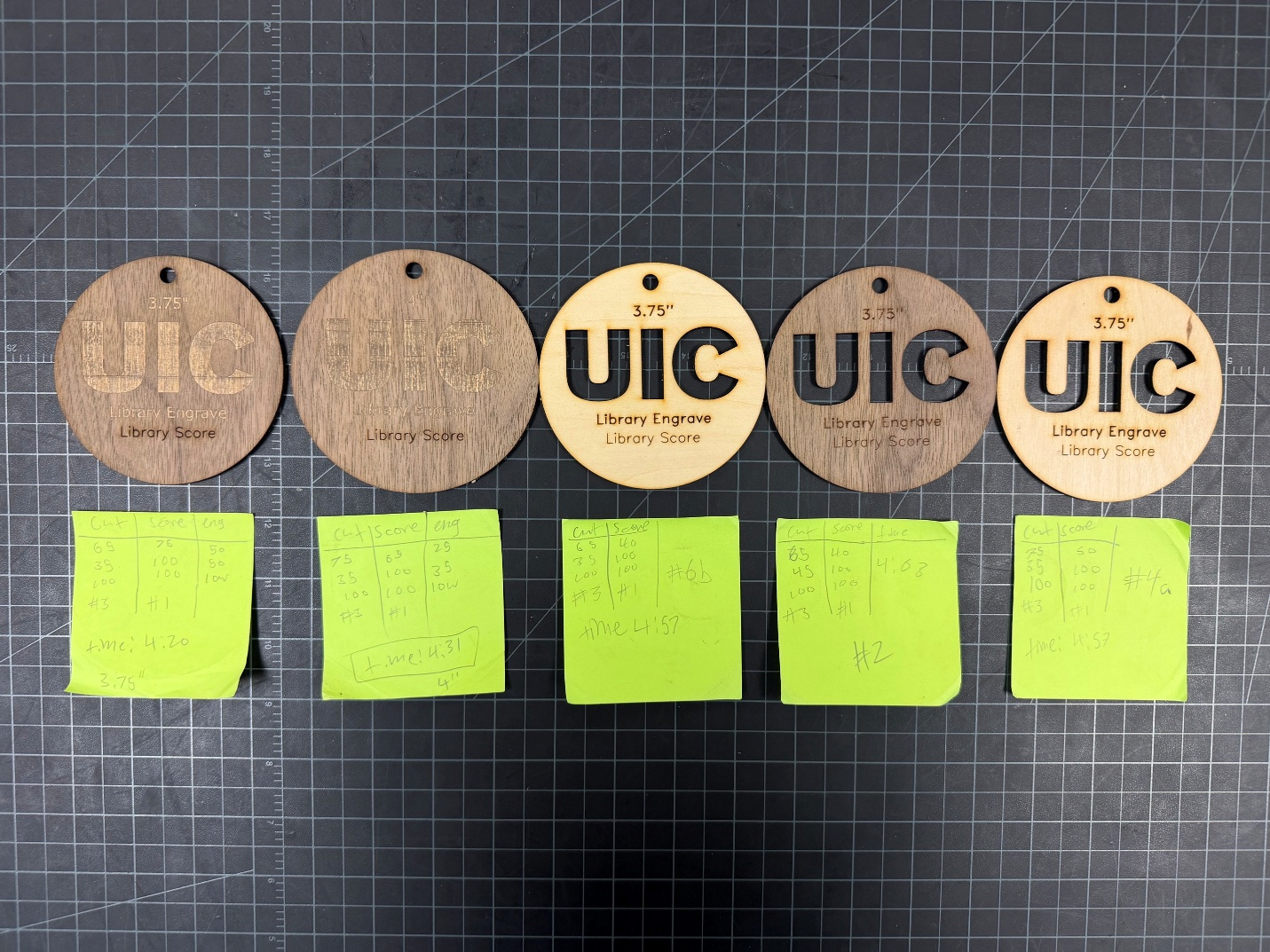 Figure 1: Different Laser Cutter Engraving and Cutting Settings Visualizing Thought Process.
In other words, digital fabrication visualizes production workflows through non-linear cycles of experimentation, failure, and revision, illustrating the iterative nature of experimentation. This methodological approach closely resembles established characteristics of digital scholarship, including emphasis on experiments, process, iteration, and multimodality. The implication of this similarity is that, just as digital scholarship researchers and practitioners approach their projects as experiments to frame existing questions in a new and theoretical way, library makerspace researchers and practitioners can complicate forms of making that cannot be replicated through traditional approaches alone and extend its discourse by (re)-testing, reconfiguring, and “theorizing exiting questions and approaches in a new way” (Piper, 2017; Underwood 2017, p. 8)
Digital Labor and Visibility of Scholarly Work
Another critical point of convergence between academic library makerspaces and digital scholarship at UIC Library’s Digital Scholarship Hub is the recognition of digital labor. Digital scholarship literature has long emphasized the invisibility of labor that sustains digitally mediated research and teaching – ranging from data preparation and tool development to instructional design and infrastructure maintenance (Fischer, 2025). Notably, the six plywood engravings with different cutting settings in Figure 1 above suggest that library makerspaces make this labor materially visible through documentation.
In the DFL, digital labor is distributed across the librarian and student staff, whose work includes curriculum development, workshop instruction, documentation, troubleshooting, and collaborative design. Seeing this labor as scholarly rather than merely mechanical places the lab in conversation with efforts in digital scholarship to acknowledge failure, imperfection, and repeated experiments as central to knowledge production. This recognition also informs internal practices: student staff are trained as peer educators, their contributions are documented, and their work is understood as integral to the missions of both the UIC Library and the university. In this respect, in the DFL, digital and physical labor is not only performed but also analyzed as a scholarly topic.
Environmental Mindfulness as Reflective Scholarly Responsibility
The DFL’s environmentally mindful approaches to all projects further strengthen the connection between makerspaces and digital scholarship. Digital fabrication is not only material-consumptive, involving acrylics, textiles, wood, energy consumption, noise production, and machine wear. At the same time, it is undergirded by digital material constraints shaped through representations sketched in design tools, encoded in software, stored in databases, processed in computer memory, and transmitted across networks (Dourish, 2017). By explicitly recognizing these intertwined material and digital constraints, and by encouraging critical reflection on these layered forms of consumption, the DFL seeks to avoid reproducing extractive or wasteful practices under the guise of innovation.
Indeed, the DFL’s environmentally mindful approach treats sustainability as a scholarly and ethical concern. Decisions about eligible projects, instructional design, and material use are informed by awareness of environmental impact and institutional responsibility. For example, both course-embedded and engagement workshops encourage learners to operate equipment directly under guided supervision. The noise generated by the lab’s laser cutter and CNC machine is intentionally incorporated into the learning experience to cultivate awareness of energy consumption, machine impact, and the material realities of responsible making. To illustrate how these commitments materialize in practice, a portion of the DFL’s policy is excerpted below.
We aim to challenge the traditional notion of perfection by embracing environmentally conscious and inclusive practices. In our approach, we prioritize sustainability over flawless manufacturing. For this reason, we use 20% infill instead of 100% for 3D printing. While 100% infill may replicate high-end manufacturing quality, it requires more filament, which can harm our mother nature due to its difficulty in decomposition. We may also ask you to resize your design to maximize the use of our remaining materials (filament, plywood, or acrylic) from other projects.
We believe that perfect designs often consume excessive resources, and this excess can be detrimental to both the environment and the spirit of creative innovation. Therefore, we focus on functionality and meaning over absolute perfection, which somehow echoes modernist architectural emphasis on a minimalist esthetic. Flaws and imperfections that may arise during fabrication can often be addressed through post-processing techniques, such as sanding, allowing for a balance between quality, resource conservation, and creativity (University of Illinois Chicago Library, 2025).
This recognition that the spirit of innovation and creativity and pursuit of perfection, without due care, could harm the environment echoes digital scholarship conversations that interrogate the ecological costs of digital infrastructures and technologies, with more recent examples including debates on the environmental harms of AI data centers, as mentioned earlier. Indeed, both practitioners and researchers of digital scholarship have noted that digital approaches can reshape scholarly processes and learning experiences in both exclusionary and liberatory ways through technology’s dual power to (re)configure life chances and enact transformation (Shin, 2024). By embedding environmental mindfulness into both policy and pedagogy, the DFL positions making as an opportunity for critical engagement with materiality, sustainability, and responsibility, challenging and reconfiguring its own practices.
Equity and Access to Learning
Equity is central to the DFL’s pedagogical philosophy. While providing access to digital fabrication tools and resources is an important step toward educational equity, physical access alone does not promise meaningful engagement in making. It is because, as Vossoughi et al. (2016) and Nichols (2020) argue, makerspaces are not neutral learning environments, they may reproduce existing educational inequities when differences in learners’ prior knowledge, technical experience, gender and sexuality, and sense of belonging are not adequately addressed through thoughtful instructional design.
This understanding informs the DFL’s instructional and service models. While the DFL supports research and instruction through course-embedded workshops and disciplinary collaborations, it also offers engagement workshops and individual consultations that welcome patrons interested in exploring 3D design or digital fabrication for their own creative projects. Engagement workshops, such as an introductory 3D printing workshop in which participants design and fabricate a fidget spinner, provide an accessible entry point for learners with little or no prior experience. Through guided play and hands-on experimentation, participants become familiar with digital design software, fabrication tools, and the iterative processes involved in transforming an idea into a physical object. These workshops are designed to help learners overcome the initial learning curve that may otherwise prevent them from returning to the makerspace.
Underpinning this pedagogical approach is the lesson learned from past practices that access to equipment does not necessarily translate into access to learning. Indeed, for patrons to become returning library makerspace users, they must develop a sense of design ownership and agency: the confidence and ability to conceptualize their own projects, make design decisions, experiment with different approaches, and navigate the challenges fabrication incurs. Individual consultations extend the learning opportunities introduced in general-purpose workshops by providing personalized guidance while allowing patrons to retain ownership of their designs and creative decisions.
Project Examples: Digital Fabrication Lab and Digital Scholarship in Practice
Example 1: Assistive Device Design with the Department of Occupational Therapy and the Assistive Technology Unit
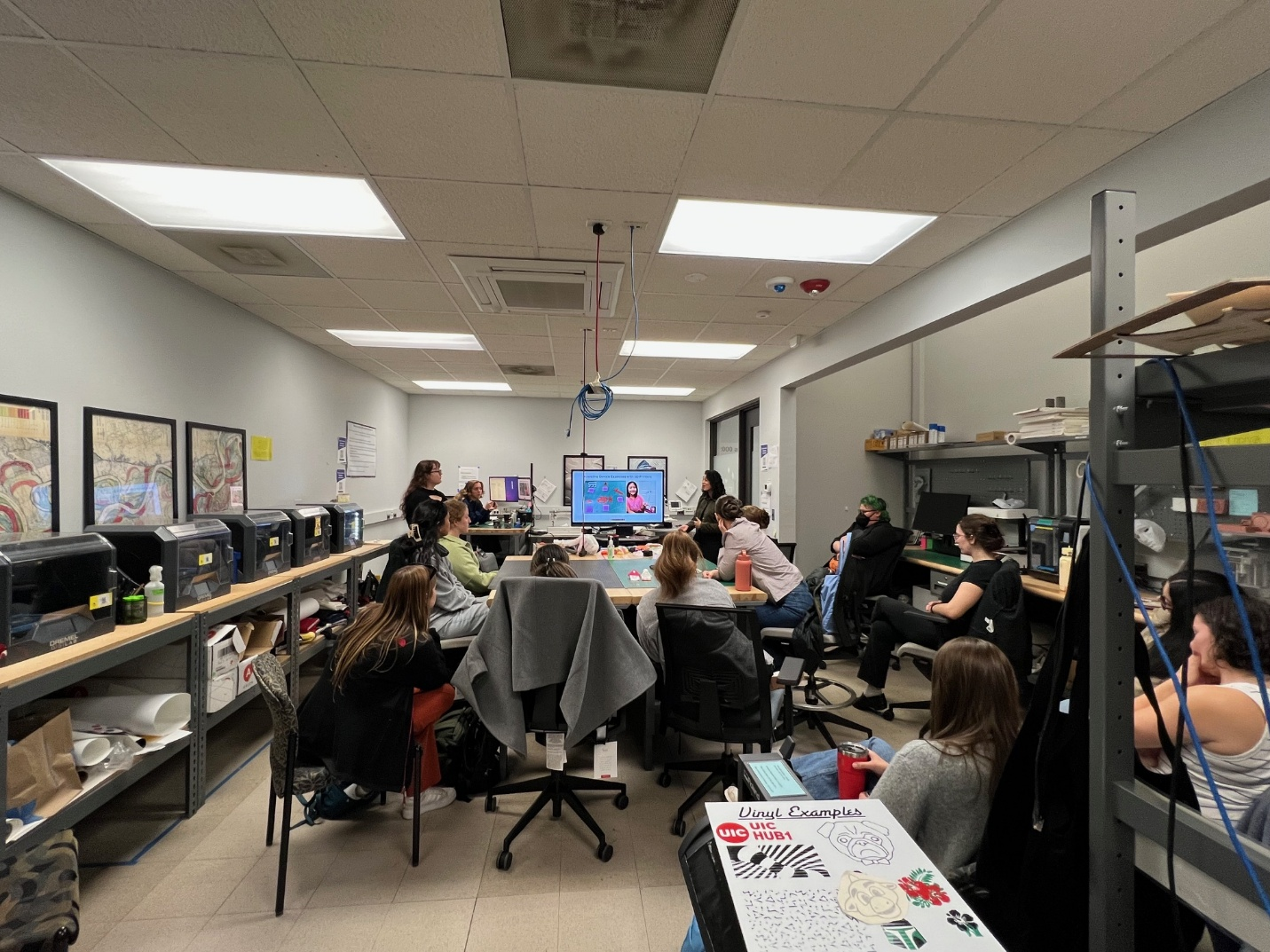 Figure 2: Digital Fabrication Lab Student Staff Members and the Guest Speaker Present Different Assistive Device Examples Created at the Lab to Occupational Therapy Doctoral Students (October 31, 2025)
One example of digital scholarship in practice at the DFL is the ongoing collaboration with the Department of Occupational Therapy in the College of Applied Health Sciences and the Assistive Technology Unit at UIC. In occupational therapy, 3D printing has emerged as a valuable tool for practitioners, enabling the creation of cost-effective, customized, low-tech adaptive equipment across a wide range of practice settings. Studies have proven that fabrication technologies not only support functional outcomes but also encourage client collaboration in the design process, enhancing the personal relevance and meaningfulness of therapeutic interventions (Aflatoony et al., 2023). This growing practice prompted OT faculty to consider how to best teach and train students in the use of emerging fabrication technologies and reach out to the DFL for structured instruction to expose OT students to hands-on exposure and build collaboration with professionals already using 3D printing.
The outcome of this collaboration was ultimately a week-long series of course-integrated workshops that combine occupational therapy pedagogy, critical digital design principles, and assistive technology expertise. These workshops provide OT students with hands-on training experiences grounded in real-world, peer-to-peer, and interdisciplinary exchange. Through structured, guided forms of play, OT students learn basic 3D design principles and fabricate a simple assistive device during a 75-minute conceptual instruction session, followed by a one-hour lab session. Instead of simply watching equipment demonstration or reproducing a model demonstrated by DLF student instructors, OT students are challenged to identify its design limitations and improve upon it, cultivating a sense of design ownership and agency through critical reflection and iterative experimentation. In this process, students engage in patient-centered design, negotiate the material constraints of fabrication, and critically consider the functionality of their designs, while also exploring potential recycling methods for devices that are no longer usable. In pedagogically situating student learners as designers, not passive recipients of technology instruction, this collaboration proved how library makerspace instruction can perform as a form of digital scholarship that foregrounds critical reflection and learner agency while addressing disability issues in clinical and community contexts at an affordable cost.
This interdisciplinary collaboration exemplifies digital scholarship in practice within the academic library makerspace. It also creates meaningful instructional and leadership opportunities for student staff in the DFL, supporting their professional development and acknowledging their labor and contributions to teaching and scholarship. As part of a formal memorandum of understanding between the Digital Scholarship Hub and the Department of Occupational Therapy, DFL student staff were formally listed as workshop instructors in the OT curriculum.
Example 2: Zine Project with Incarcerated Students at the Cook County Department of Corrections in Chicago
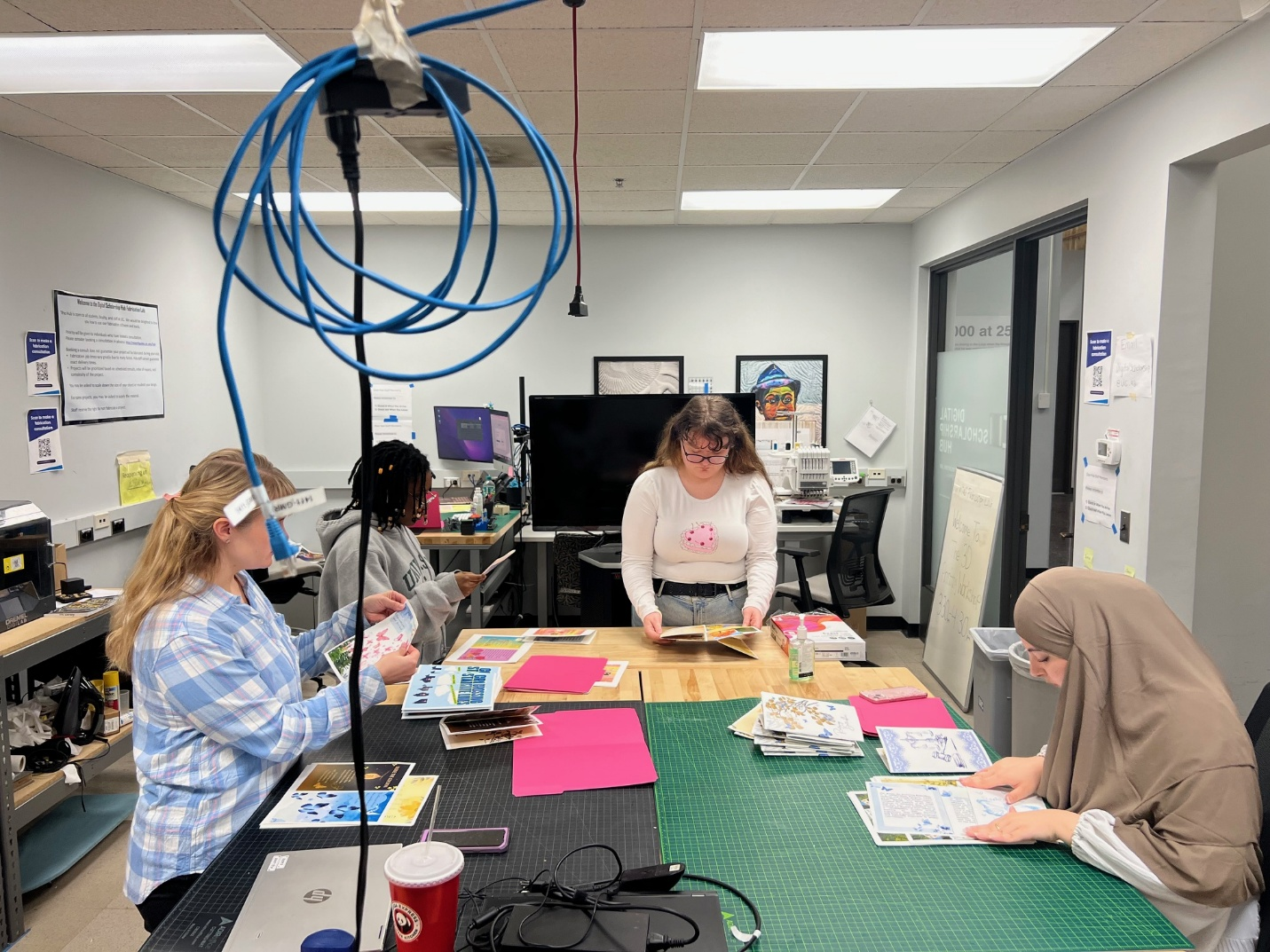 Figure 3: Physical Labor through Zine Making in the Digital Fabrication Lab, November 7, 2025
Another notable project that demonstrates digital scholarship in practice in the DFL is a collaborative zine-making project with incarcerated students from the Cook County Department of Corrections (CCDOC) in Chicago. This project was launched in Summer 2024 as part of the Transformative Connections program led by the law faculty and the University Librarian at the UIC Library (Pasanen and Hanna, 2024). This course-integrated collaboration brings together the Digital Fabrication Lab and several campus and community partners – including the Departments of Black Studies; Gender and Women’s Studies; Criminology, Law, and Justice; and the UIC College of Business Administration – to support incarcerated students’ therapeutic and creative expression through zine-making. Deploying digital design tools, small-scale fabrication utilizing affordable resources, and digital and print publishing workflows with guided writing and reflection, the project positioned zines as both material artifacts and critical interventions that document lived experience and resilience within carceral systems.
The DFL’s involvement extends beyond technical support. Because incarcerated students cannot physically access the DFL, the law teaching assistant serves as a communication conduit between them and the lab, facilitating the exchange of ideas, materials, and feedback throughout the design and production process. Through this mediated collaboration, DFL staff, the law teaching assistant, and student interns support incarcerated students in learning layout, accessible typography, and production techniques, while encouraging them to approach zine-making as a reflective practice that connects personal storytelling to questions of power, surveillance, discipline, and social justice. Clearly, the DFL’s involvement is not for product innovation or skill acquisition, but for nurturing healing through collective meaning-making. By treating zine-making as a form of digital and material scholarship, the project challenges conventional boundaries between the digital and the material and between academic and community knowledge production. Incarcerated students, DFL staff, and the teaching assistant and interns alike engage in processes of authorship, design, and iterative revision, using digital tools (Canva) to transform personal narratives into physical publications. The use of low-cost materials (letter-sized paper and glue to bind pages together in accordance with CCDOC’s regulations) and reproducible formats exemplify the DFL’s commitment to sustainability while valorizing labor and process over polished, flawless outputs.
To summarize, the CCDOC zine project demonstrates how library makerspaces can be mobilized as sites of scholarship in service of community partners and public humanities while making visible the material, digital, instructional, and relational labor that underpins such work. In so doing, the project shows digital scholarship in practice in the library makerspace, which extends beyond safe campus boundaries into unguarded social problems.
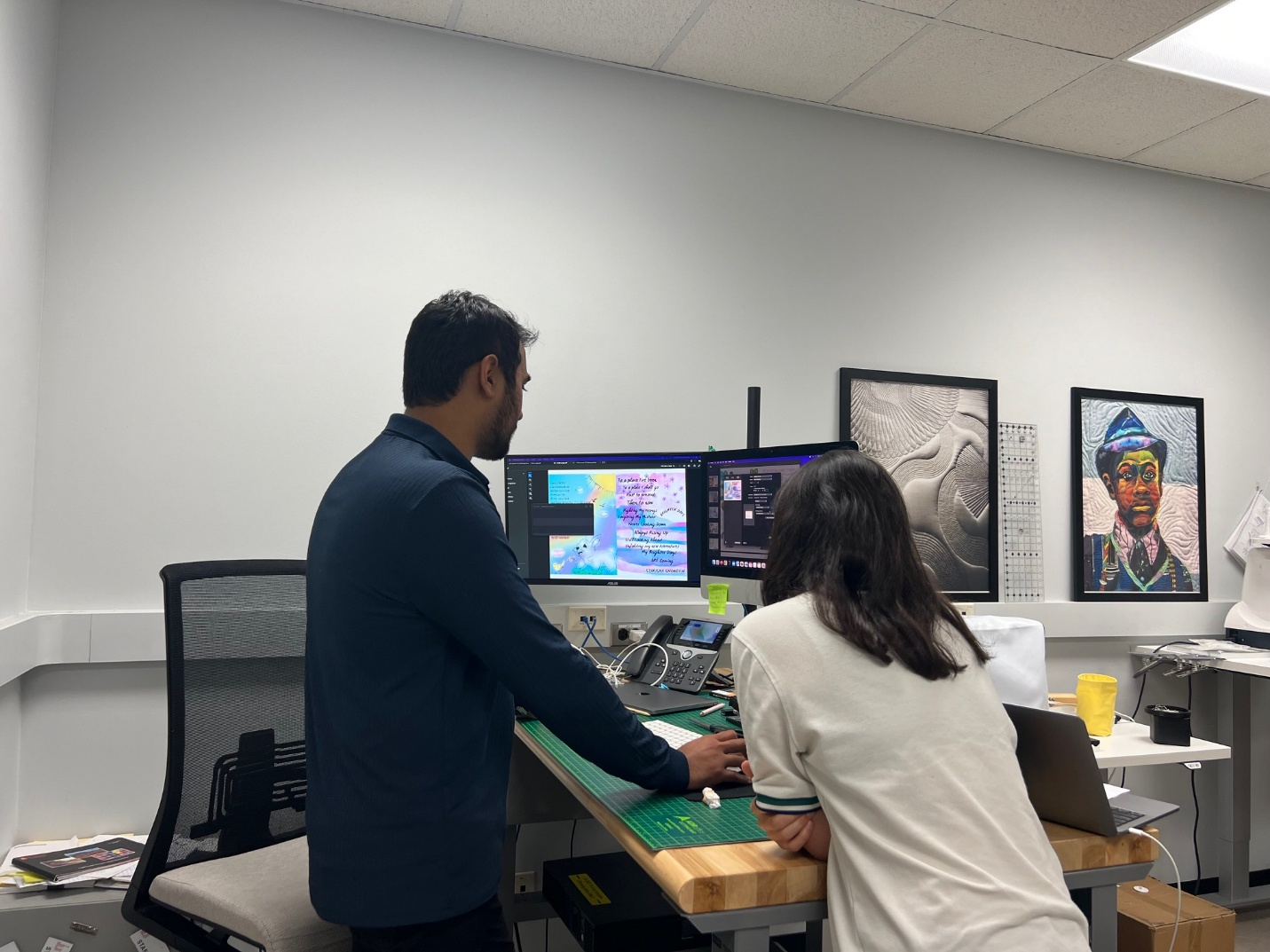 Figure 4: DFL Student Staff and a Student Intern’s Discussion of Accessible Typography for Individuals with Visual Impairments
Example 3: Digital Fabrication and Spatial Design at UIC Crossroads Conference
The last example of digital scholarship in practice in the DFL is its contribution to the conference titled “UIC Crossroads: Data Science in the Humanities and Humanities in Data Science” as an indispensable partner. Launched in Spring 2026 under the leadership of the Digital Scholarship Librarian, “Crossroads” was a large-scale collaboration among the College of Liberal Arts and Sciences, the College of Urban Planning and Policy, the UIC Library, and the Undergraduate Student Government, and external collaborators. Centered on the theme “Data Science in the Humanities and Humanities in Data Science,” the conference was designed to foster dialogue between scholarship on human culture and data science practices. Across four days of programming, it highlighted intersectional and interdisciplinary approaches on how computational and digital techniques can enrich humanistic research while also critically engaging the implications of data-driven approaches. Featured projects included work in data visualization, digital collections, text analysis, corpus studies, natural language processing (NLP), artificial intelligence (AI), data management, Wikidata, digital fabrication and spatial design, and related computational and digital methods (Shin, Crossroads 26 Program Book, 2026).
“Crossroads” served as an infrastructure by bringing together disciplinary communities that do not typically share projects within the university. To facilitate exchange across disciplinary and methodological boundaries, the conference was organized into several thematic sections, including “Wikipedia for Data Scientists and Information Professionals,” “Data Science at the Crossroads of Language, Literature, and Society,” “Data Science in the Classroom: Student Lightning Talks,” “Data Science in Urban Data Visualization Lab: Remapping Chicago: Data Visualization and Interpretation of Urban Histories,” “Data Science in Practice: At the Crossroads of Digital Collections, Digital Scholarship, and Data Management,” and “Digital Fabrication and Spatial Design.” These categories reconfigure data science as a heterogeneous and interdisciplinary field shaped through humanistic inquiry, public engagement, and critical reflection.
The DFL’s contribution to the conference as an equal partner was clear. Far from treating digital fabrication as separate from computational or data-oriented inquiry, the DFL places its work side by side with research presentations by outside experts, faculty, and student scholars. In so doing, the DFL’s participation dismantled conventional perceptions of makerspaces as technical support or service units and instead reconfigured the library makerspace as an active scholarly site where questions of culture, interpretation, language, design, materiality, and technology converge. This positioning was also meaningfully inclusive in higher education, where makerspaces are primarily associated with engineering or product innovation. By foregrounding digital fabrication as a scholarly topic in a conference dedicated to the relationship between data science and the humanities, the DFL attempts to show how library makerspace practices can participate in digital scholarship through critical design, reflective thinking, collaborative making, and cultural interpretation.
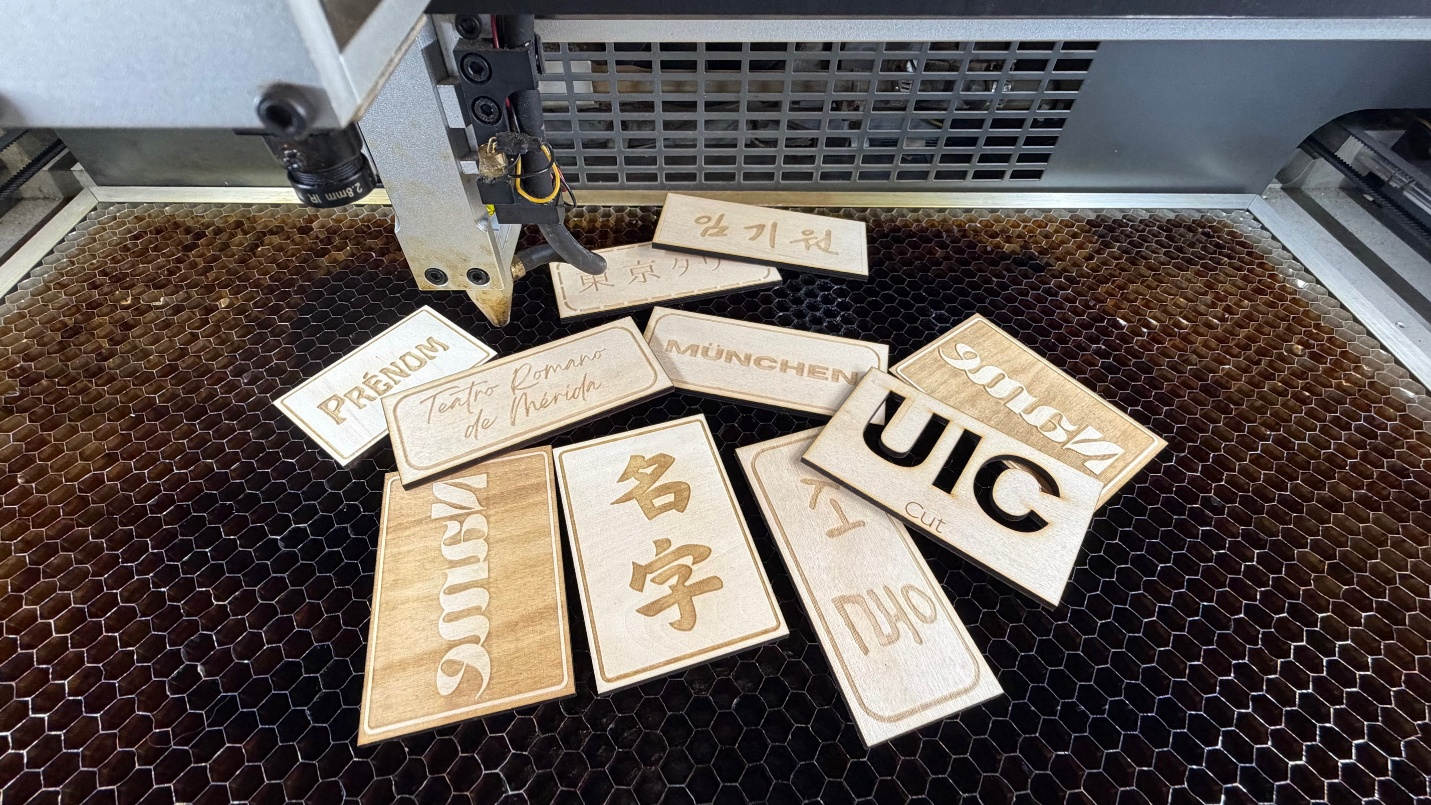 Figure 5: Multilingual Signboards Representing Names and Places, Fabricated with the Laser Cutter in the UIC Library’s Digital Fabrication Lab
Indeed, the DFL’s “Digital Fabrication and Spatial Design: Multilinguality and Traditional Signboards” made these connections visible by exploring digital fabrication as a space where digital methods and humanistic inquiry intersect. Participants first learned about the cross-cultural histories of traditional signboards, which were traditionally fabricated by hand from materials such as metal, wood, and stone. For example, traditional Korean hanging signboards (hyeonpan) display the names of buildings while also encoding the cultural values and social ideals associated with those spaces. In Joseon royal architecture, names and inscriptions often drew on Confucian texts and ideals of governance, while calligraphy, color, ornamentation, and material craftsmanship reflected the function and hierarchy of the spaces in which the signboards were displayed. Indeed, in the East Asian cultural context, hyeonpan served both as identifiers and as material records through which cultural values, aesthetic practices, and spatial meanings were preserved and communicated across generations (National Palace Museum of Korea, 2022). Participants were thus encouraged to reflect on how signs could function as informational objects and, at the same time, as repositories of cultural memory, linguistic identity, and spatial meaning. They then designed and created traditional signboards from their own cultures through a guided, hands-on process that translated cultural forms into digital designs and fabricated objects using digital tools and machines.
Through this process, spatial design and digital fabrication had become an interpretive and reflective practice that prompted participants to rethink the power of language and representation, the meaning of place, and cultural preservation, as well as the labor involved in the process of making. Such attention to interpretation, reflection, and process represents core methodologies shared by makerspace pedagogy and digital scholarship. The multilingual nature of the DFL’s workshop further celebrated cultural plurality, highlighting Crossroads’ goal of fostering dialogue across disciplinary and institutional boundaries. In this respect, the DFL’s contribution to Crossroads sheds light on a possible next stage for library makerspaces as both sites and subjects of scholarly inquiry.
Conclusion and Future Direction
The evolution of the DFL in the UIC Library offers a compelling example of how academic library makerspaces can be reimagined as sites of digital scholarship. By transcending equipment-centered, transactional service models and articulating a guiding philosophy grounded in critical pedagogy, the DFL has developed meaningful curricular, community, cross-campus, and external partnerships, and fostered a collective, collaborative identity shaped by student and faculty participation. As libraries continue to navigate shifting expectations and resource constraints, the UIC Library’s DFL models may offer insights into how library makerspaces can continue to thrive, unaffected by emerging discipline-specific makerspaces. In particular, the DFL’s evolving model sheds light on how library makerspaces might make strategic decisions about the kinds of projects and partnerships they undertake, prioritizing those that draw on the library’s interdisciplinary position and create opportunities for critical inquiry, collaboration, and knowledge production through making.
References
Aflatoony, L., Lee, S. J., and Sanford, J. (2023). Collective making: Co-designing 3D printed assistive technologies with occupational therapists, designers, and end-users. Assistive Technology: The Official Journal of RESNA, 35(2), 153–162. https://doi.org/10.1080/10400435.2021.1983070.
Association of College and Research Libraries. (2016). Framework for Information Literacy for Higher Education. https://www.ala.org/sites/default/files/acrl/content/issues/infolit/framework1.pdf.
Association of Science-Technology Centers and Urban Libraries Council. (2014). Learning Labs in Libraries and Museums: Transformative Spaces for Teens. https://www.imls.gov/sites/default/files/publications/documents/learninglabsreport_0.pdf.
Benjamin, R. (2019). Race after Technology: Abolitionist Tools for the New Jim Code. Polity Press.
Bevan, B., Gutwill, J. P., Petrich, M., and Wilkinson, K. (2015). Learning through STEM-rich tinkering: Findings from a jointly negotiated research project taken up in practice. Science Education, 99(1), 98–120. https://doi.org/10.1002/sce.21151.
Bossart, J. L., Gonzalez, S. R., and Greenberg, Z. (2020). 3D printing filament recycling for a more sustainable library makerspace. College and Undergraduate Libraries, 27(2–4), 369–384. https://doi.org/10.1080/10691316.2021.1899093.
Burdick, A., and Willis, H. (2011). Digital learning, digital scholarship, and design thinking. Design Studies, 32(6), 546–556. https://doi.org/10.1016/j.destud.2011.07.005.
Burke, J. J. (2018). Makerspaces: A Practical Guide for Librarians. Rowman and Littlefield.
Chicago Maker Space. Chicago Makerspace. https://www.chicagomakerspace.com/. Accessed January 31, 2026.
Chicago Public Library. Maker Lab at Harold Washington Library Center. Retrieved from https://www.chipublib.org/maker-lab/. Accessed January 31, 2026.
Cox, J. (2019). Communicating new library roles to enable digital scholarship: A review article. In H. Fallon and G. Walton (Eds.), Librarian as Communicator: Case Studies and International Perspectives. Routledge. https://doi.org/10.4324/9781315206875.
Cun, A., Abramovich, S., and Smith, J. M. (2019). An assessment matrix for library makerspaces. Library and Information Science Research, 41, 39–47. https://doi.org/10.1016/j.lisr.2019.02.008.
Dourish, P. (2017). The Stuff of Bits: An Essay on the Materialities of Information. MIT Press.
Esposito, A. (2013). Neither digital nor open. Just researchers: Views on digital/open scholarship practices in an Italian university. First Monday, 18(1). https://doi.org/10.5210/fm.v18i1.3881.
Fallon, H., Stanislaw, S., and Walton, G. (2019). Conclusions. In H. Fallon and G. Walton (Eds.), Librarian as Communicator: Case Studies and International Perspectives. Routledge. https://doi.org/10.4324/9781315206875.
Flanders, J. (2016). The productive unease of twenty-first-century digital scholarship. In M. Terras, J. Nyhan, and E. Vanhoutte (Eds.), Defining Digital Humanities: A reader. Routledge.
Gonzalez, S. R., and Bennett, D. B. (2014). Planning and implementing a 3d printing service in an academic library. Issues in Science and Technology Librarianship, 78(7). https://doi.org/10.29173/istl1619.
Groenendyk, M., and Gallant R. (2013). 3D printing and scanning at the Dalhousie University Libraries: A pilot project. Library Hi Tech, 31(1), 34–41, https://doi.org/10.1108/07378831311303912.
Harding, S. (1987). Introduction: Is there a feminist method? In S. Harding (Ed.), Feminism and Methodology (pp. 1–14). Indiana University Press.
Hatch, M. (2013). The Maker Movement Manifesto: Rules for Innovation in the New World of Crafters, Hackers, and Tinkerers. McGraw-Hill.
Mann, L. (2019). Information literacy and instruction: Making a place for makerspaces in information literacy. Reference and User Services Quarterly, 58(2), 82–86. https://doi.org/10.5860/rusq.58.2.6927.
Martin, L. (2016). Introduction. In A. Mackenzie and L. Martin (Eds.), Developing Digital Scholarship: Emerging Practices in Academic Libraries (xiii–xx). Facet Publishing.
mHUB. (n.d.). mHUB Chicago. https://www.mhubchicago.com/. Accessed January 26, 2026.
Moorefield-Lang, H. M. (2015). Makers in the library: case studies of 3D printers and makerspaces in library settings. Library Hi Tech, 32(4), 583–93. https://doi.org/10.1108/LHT-06-2014-0056.
Nagle, S. B. (2021). Maker services in academic libraries: A review of case studies. New Review of Academic Librarianship, 27(2), 184–200. https://doi.org/10.1080/13614533.2020.1749093.
Nascimento, S., and Pólvora, A. (2018). Maker cultures and the prospects for technological action. Science and Engineering Ethics, 24, 927–946. https://doi.org/10.1007/s11948-016-9796-8.
National Palace Museum of Korea. (2022). Special Exhibit. https://www.gogung.go.kr/gogung/bbs/BMSR00002/view.do?boardId=5603&pageIndex=1&utm.
Nichols, T. P. (2020). Innovation from below: Infrastructure, design, and equity in literacy classroom makerspaces. Research in the Teaching of English, 55(1), 56–81. https://www.jstor.org/stable/27116884.
Pasanen, J., Ali, M., and Hanna, L. (2024). Transformative Connections. UIC Library. Retrieved from https://library.uic.edu/news-stories/transformative-connections/. Accessed January 31, 2026.
Piper, Andrew. (2016). There will be numbers. Cultural Analytics, 1(1). https://doi.org/10.22148/16.006.
Posner, M. (2016). What’s next: The radical, unrealized potential of digital humanities. In M. K. Gold and L. F. Klein (Eds.), Debates in the Digital Humanities 2016 (pp. 32–41). University of Minnesota Press.
Rahman, ATM., and Sultana, S. (2025). Digital labor: Challenges, ethical insights, and implications. In Proceedings of the Fifth ACM Conference (Conference ’25). ACM. https://arxiv.org/pdf/2506.11788.
Risam, R. (2018). New Digital Worlds: Postcolonial Digital Humanities in Theory, Praxis, and Pedagogy. Northwestern University Press.
Shin, H. (2024). Queer machine reading and close reading in literary studies in the age of AI. Journal of the Midwest Modern Language Association, 57(1), 91–122. https://doi.org/10.1353/mml.2024.a968077.
_______. (2026). Crossroads 2026 Program Book. https://go.uic.edu/crossroads.
Slatter, D., and Howard, Z. (2013). A place to make, hack, and learn: Makerspaces in Australian public libraries. Australian Library Journal, 62(4), 272–284. https://doi.org/10.1080/00049670.2013.853335.
Terras, M., Nyhan, J., and Vanhoutte, E. (Eds.). (2013). Defining Digital Humanities: A Reader. Routledge. https://doi.org/10.4324/9781315576251.
Underwood, T. (2017). A genealogy of distant reading. DHQ: Digital Humanities Quarterly, 11(2). https://dhq-static.digitalhumanities.org/pdf/000317.pdf.
University of Illinois Chicago College of Education. (2026). The Make Good Lab. https://makegoodlab.uic.edu/. Accessed January 31, 2026.
University of Illinois Chicago College of Engineering. (2026). Makerspace. https://makerspace.uic.edu/. Accessed January 31, 2026.
University of Illinois Chicago Library. (2026). The Digital Fabrication Lab Philosophy. https://researchguides.uic.edu/c.php?g=1468118&p=10994886. Accessed January 27, 2026.
Vossoughi, S., Hooper, P. K., and Escudé, M. (2016). Making through the lens of culture and power: Toward transformative visions for educational equity. Harvard Educational Review, 86(2), 206–232. https://doi.org/10.17763/0017-8055.86.2.206.
Wallace, M., Trkay, G., Peery, K., Chivers, M., and Radniecki, T. (2018, August 3–5). Maker competencies and the undergraduate curriculum. Paper presented at the 2018 International Symposium on Academic Makerspaces, Stanford, CA.
Acknowledgements
I am grateful to the Occupational Therapy faculty and practitioners who trusted me with a series of exciting collaborative projects, especially Abby Thomas, Audrey Phillips, Julia Bates, Toni Van Denend, Caitlin Smith, and Elizabeth Paterson; to Rhea Ballard-Thrower for entrusting the Digital Scholarship Hub with the production of the zine project; and to Abigail Goben, Tracy Seneca, Andrea Smith, Nathan Thokkudubiyyapu, Jung Mi Scoulas, Andrea Craft, Patrick Fortmann, Zachary McDowell, Kyuho Shin, and student presenters – Christopher, Janelle, Gustas, Titilope, Ruth, Ryan, Yemisi, Anh, Oliver, Julian, and McKenzie – for their contributions to the successful launch of the Crossroads conference. My deepest thanks go to all the Digital Scholarship Hub student staff who have shared this journey with me – Shaheer, Jenna, Tessa, Catherine, Jeremy, Eric, Uriel, Folake, Parvathi, and Het. Their creativity, curiosity, and willingness to experiment have shaped not only the projects discussed in this article but also my understanding of what a digital scholarship program can become. Lastly, I am especially thankful to Carl Lehnen for recognizing the potential of this work and for offering critical feedback throughout its development.
Author Bio
Heejoung Shin is the clinical assistant professor and digital scholarship librarian at the University of Illinois Chicago, where she leads the Library’s Digital Scholarship Hub and oversees digital scholarship initiatives. Her work encompasses digital scholarship instruction and curriculum development, student mentorship, and cross-campus and external partnerships, integrating digital pedagogy, computational methods, media production, and digital fabrication into teaching and research. Her work bridges the humanities and library and information science, with particular interests in digital culture, pedagogy, and emerging technologies. Her work has appeared in Library Trends, The Journal of the Midwest Modern Language Association, The Journal of Computational Literary Studies, The Review of Korean Studies, The Korean Studies Quarterly, and Feminist Studies in English Literature. She has also contributed to open educational publishing through Pressbooks production and technical editing for Drug Use and Misuse: A Community Health Perspective (2022). She holds a PhD in English from the University of Wisconsin–Milwaukee, an MS/LIS from the University of Illinois Urbana-Champaign, and an MA in English, along with three BAs in English Language and Literature, American studies, and Multimedia Studies, and a minor in Business Administration from Ewha Womans University in Seoul, South Korea.